FREE WHITEWATER

Author Archive for JOHN ADAMS

Daily Bread for 6.22.18

Good morning.

Friday in Whitewater will be rainy in the morning with a daytime high of sixty-five.  Sunrise is 5:16 AM and sunset 8:37 PM, for 15h 20m 16s of daytime.  The moon is a waxing gibbous with 72.9% of its visible disk illuminated.

Today is the five hundred eighty-eighth day.Days since Trump’s election, with 11.9.16 as the first day.


On this day in 1945, after a 62-day battle, the Allies are victorious at the Battle of Okinawa:

The battle has been referred to as the “typhoon of steel” in English, and tetsu no ame (“rain of steel”) or tetsu no bofo (“violent wind of steel”) in Japanese.[23][24][25] The nicknames refer to the ferocity of the fighting, the intensity of Japanese kamikaze attacks, and the sheer numbers of Allied ships and armored vehicles that assaulted the island. The battle was one of the bloodiest in the Pacific, with approximately 160,000 casualties on both sides: at least 75,000 Allied and 84,166–117,000 Japanese,[26] including drafted Okinawans wearing Japanese uniforms.[16] 149,425 Okinawans were killed, committed suicide or went missing, a significant proportion of the estimated pre-war 300,000 local population.[26]

In the naval operations surrounding the battle, both sides lost considerable numbers of ships and aircraft, including the Japanese battleship Yamato. After the battle, Okinawa provided a fleet anchorage, troop staging areas, and airfields in proximity to Japan in preparation for the planned invasion.

Recommended for reading in full — 

 Adam Serwer writes Trumpism, Realized (“To preserve the political and cultural preeminence of white Americans against a tide of demographic change, the administration has settled on a policy of systemic child abuse”):

Few of the Trump administration’s policies better exemplify the Trump campaign’s commitment to restoring America’s traditional hierarchies of race, religion, and gender, than family separation. That commitment—and Republicans’ muted opposition to or vigorous support of the administration’s actions —has plunged the United States into a profound moral crisis that will define the nation’s character for decades to come. To harden oneself against the cries of children is no simple task. It requires a coldness to suffering that will not be easily thawed. The scars it inflicts on American civic culture will not heal quickly, and they will never completely fade.

Americans should have fathomed the depth of the crisis Trump would cause in 2016, but many chose denial, ridiculing those who spoke the plain meaning of Trumpism as oversensitive. Since then, Trump has failed the people of Puerto Rico in the wake of Hurricane Maria; deliberately revoked the immigration status of hundreds of thousands of black and Latino immigrants; retreated from civil-rights enforcement; applied an immigration ban to a set of predominantly Muslim countries; attempted to turn black athletes into pariahs for protesting the unjust killings of their countrymen by the state; and defended the white nationalists who terrorized Charlottesville, Virginia. The separation of children from their families at the border in order to punish children for their parents’ decision to seek a better life America, as the forebears of millions of Americans once did, has now clarified for many what should have been obvious before.

People who would do this to children would do anything to anyone. Before this is over, they will be called to do worse.

Jennifer Rubin contends It’s this simple: Report the abuse:

A reader who has spent five decades as a clinical child psychologist has made a brilliant suggestion to mitigate the harm being done to innocent, defenseless children under President Trump’s inhumane child separation policy.

The Children’s Bureau, an office of the Administration for Children and Families within the Department of Health and Human Services, has a handy website to explain the rules regarding the reporting of suspected mistreatment or abuse of children:

All States, the District of Columbia, American Samoa, Guam, the Northern Mariana Islands, Puerto Rico, and the U.S. Virgin Islands have statutes identifying persons who are required to report suspected child maltreatment to an appropriate agency, such as child protective services, a law enforcement agency, or a State’s toll-free child abuse reporting hotline.

In fact, all the doctors and other professionals inside these facilities have a legal obligation to report abuse and mistreatment. (“Approximately 48 States, the District of Columbia, American Samoa, Guam, the Northern Mariana Islands, Puerto Rico, and the Virgin Islands designate professions whose members are mandated by law to report child maltreatment.”) The people who must report abuse or mistreatment include teachers, counselors, law enforcement and child-care providers. When must they report?

The circumstances under which a mandatory reporter must make a report vary from State to State. Typically, a report must be made when the reporter, in his or her official capacity, suspects or has reason to believe that a child has been abused or neglected. Another standard frequently used is in situations in which the reporter has knowledge of, or observes a child being subjected to, conditions that would reasonably result in harm to the child.

 Rosie Gray cautions Don’t Blame Trump’s Advisers for Trump (“The tendency to look for a puppet master behind Trump’s actions is misguided.”):

And Trump is also charting his own course on his Twitter feed, where he can sway the outcome of events without consulting anyone beforehand. House Republican leaders delayed a vote on an immigration bill that would give a pathway to citizenship for the so-called “Dreamers,” or undocumented immigrants who were brought to the U.S. as children, while also funding Trump’s border wall, after a more conservative bill failed to pass. The move to delay the vote came after Trump, who backs the legislation, undermined it in a tweet on Thursday morning. “What is the purpose of the House doing good immigration bills when you need 9 votes by Democrats in the Senate, and the Dems are only looking to Obstruct (which they feel is good for them in the Mid-Terms). Republicans must get rid of the stupid Filibuster Rule-it is killing you!” Trump tweeted.

“I think the president is a little all over the place when it comes the legislative process,” Nunberg said. “And partly that’s the failure of his White House staff.  They tell him one thing and then it’s another thing.”

If the White House sometimes seems at odds with itself, well, that’s partly the president’s doing too, the former White House official said. “He loves watching people fight.”

Gina Barton and Ashley Luthern report A killer left DNA evidence behind. But Milwaukee police destroyed it:

The body of Deborah Lynn Oberg was found under the Hoan Bridge on July 11, 1983.

The 28-year-old single mother struggled with the man who assaulted and stabbed her outside the Summerfest grounds.

At autopsy, the medical examiner discovered the assailant had left pubic hairs behind.

But even with continuing advances in DNA technology, Oberg’s killer likely will never be caught.

That’s because the Milwaukee Police Department destroyed the evidence in her case — along with at least 50 other homicides. Police trashed the evidence in the 1990s, well after authorities became aware of DNA’s value in solving crimes. While most of the homicide cases were closed, some remained open and unsolved, a Milwaukee Journal Sentinel investigation found.

The department’s reason for the destruction? Making more room in a storage facility.

Oberg isn’t the only victim deprived of justice because of the purge. In another case, a man who killed a 34-year-oldmother on a playground is still free. In a third, four children were molested after a pedophile avoided conviction for murdering a 9-year-old girl.

  A Tiger Slowly Creeps Up Behind Visitors:
Daily Bread for 6.21.18

Good morning.

Thursday, the first day of summer, will in Whitewater be rainy with a high of sixty-eight.  Sunrise is 5:16 AM and sunset 8:37 PM, for 15h 20m 23s of daytime.  The moon is a waxing gibbous with 62.3% of its visible disk illuminated.

Today is the five hundred eighty-seventh day.Days since Trump’s election, with 11.9.16 as the first day.


On this day in 1788, the U.S. Constitution is ratified:

Delaware, on December 7, 1787, became the first State to ratify the new Constitution, with its vote being unanimous. Pennsylvania ratified on December 12, 1787, by a vote of 46 to 23 (66.67%). New Jersey ratified on December 19, 1787, and Georgia on January 2, 1788, both with unanimous votes. The requirement of ratification by nine states, set by Article Seven of the Constitution, was met when New Hampshire voted to ratify, on June 21, 1788.

Recommended for reading in full — 

Julia Preston writes What You Should Know About Family Separations (“Yes, it’s Trump policy. No, it’s not the law”):

Okay. So doesn’t the law require children to be separated from parents caught crossing illegally?

No, it doesn’t.

The surge in children separated from parents since May 7 is directly related to the Trump administration’s zero tolerance policy. This is convoluted, so bear with me.

Under that policy, parents apprehended at the border have been transferred from Customs and Border Protection, an agency that includes the Border Patrol and is part of DHS, into the custody of the United States Marshals Service. Those are the law enforcement officers who handle movements of people on trial in federal courts. The parents have been held in federal pre-trial detention.

Their children don’t go with them. When the parents and their children crossed the border, they were together, forming what DHS officials call a family unit. Under the new policy, when the parent is transferred to federal court, DHS officials are re-classifying their children as unaccompanied minors—the term for children who arrived at a United States border without a parent or legal guardian. The children are physically separated from their parents. They are sent to deportation proceedings in immigration court, separate from their parents. And, by law, DHS border officials are required within 72 hours to transfer the children to the custody of yet another federal agency: the Department of Health and Human Services, or HHS. The children are held in shelters overseen by health officials, mostly administered by private contractors, which are closed to the public.

Can DHS officials just declare that a child who crossed the border with a parent now suddenly is unaccompanied, and separate them to be sent to HHS shelters?

Good question.

DHS officials say they have broad authority to make these determinations. But until the zero tolerance policy, DHS officials were identifying children as unaccompanied only if there was no parent or legal guardian with them “at the time of apprehension.”

The explicit intent of several laws and federal court rulings governing the handling of children at the border is that they should always be treated with special care. In general under American law, disrupting or severing the relationship between a child and their parent is a severe measure to be taken when less harsh alternatives are not available.

William Wan reports The trauma of separation lingers long after children are reunited with parents:

“It’s not like an auto body shop where you fix the dent and everything looks like new. We’re talking about children’s minds,” said Luis H. Zayas, professor of social work and psychiatry at the University of Texas at Austin. “Our government should be paying for this. We did the harm; we should be responsible for fixing the damage. But the sad thing for most of these kids is this trauma is likely to go untreated.”

Children who have undergone traumatic separation often cling desperately to their parents after they are reunited and refuse to let them out of their sight, say therapists and child psychologists. Many suffer from separation anxiety, cry uncontrollably and have trouble sleeping because of recurring nightmares.

Others develop eating disorders, problems with trust and unresolved anger, in some cases against their parents.

Chris Geidner reports No Immediate Changes Planned For Children Already Separated Under Trump Policy, HHS Officials Say (“It is still very early and we are awaiting further guidance on the matter”):

Although the executive order signing followed days of national outcry over the policy, it was not immediately clear what effect the order would have on new migrant families crossing the border — and federal officials were unclear Wednesday night about whether there would be any changes for those families already separated.

On the question of what happens to the more than 2,000 children already separated from their parent or parents over the past two months, the initial answer from the Department of Health and Human Services, which is responsible for “unaccompanied” minors, was that nothing would change immediately.

“For the minors currently in the unaccompanied alien children program, the sponsorship process will proceed as usual,” HHS spokesperson Kenneth Wolfe told BuzzFeed News.

Hours later, a more senior spokesperson said in a statement that Wolfe “misspoke earlier regarding the Executive Order signed today by the President.” That spokesperson, Brian Marriott, went on to say, “It is still very early and we are awaiting further guidance on the matter” — while noting that “[r]eunification is always the ultimate goal.”

Philip Rucker writes of ‘A blowtorch to the tinder’: Stoking racial tensions is a feature of Trump’s presidency:

President Trump this week likened Hispanic immigrants to vermin. He warned that they would “pour into and infest our country.” And he defended his administration’s family separation policy by alleging that parents crossing the southern border with their children were poised to commit crime and murder.

For him, this language is not new.

Echoing the words and images of the white nationalist movement to dehumanize immigrants and inflame racial tensions has become a defining feature of Donald Trump’s presidency and of the Republican Party’s brand.

Trump has stirred supporters at rallies by reading “The Snake,”a parable about a tenderhearted woman who takes in an ailing snake but is later killed when the revived creature bites her. It should be heard as a metaphor for immigration, he says.

The president referred to some African nations as “shithole countries.” He posited that “both sides” were to blame for last summer’s deadly white supremacist rally in Charlottesville. And, again and again, he has accused black football players who took a knee during the playing of the national anthem to protest police discrimination of being un-American.

 Consider The Elephant’s Superb Nose:

Sounds of Trumpism’s Malevolence

Robert Kagan, writing of Trump’s foreign policy, describes the uncaring malevolence of Trump’s perspective:

Trump’s America does not care. It is unencumbered by historical memory. It recognizes no moral, political or strategic commitments. It feels free to pursue objectives without regard to the effect on allies or, for that matter, the world. It has no sense of responsibility to anything beyond itself.

The same is true for domestic policy. Trumpism is similar to that which likely would have happened if Know Nothings, the Klan, or the Bund had gained national power.

Indeed, it’s most like the Bund: a perverse mix of domestic and foreign autocratic positions and symbols, in the service of authoritarianism, racism, and the self-dealing of key operatives.

There were large numbers in these dark organizations at their respective heights; members were proud of their views.  We can expect the same now.

Arguing with each person so ignorantly or malevolently aligned is a poor strategy – the principal objects of opposition & resistance are Trump, His Inner Circle, Principal Surrogates, and Media Defenders.  Along the way, one may sometimes find Trumpism Down to the Local Level.

The detestable movements that our forefathers faced and overcame did not fall because their adherents saw reason; they fell because their leaders and elites met ruin.

Yet, there’s a misguided – and self-destructive – view that one should not speak ill of Trumpism lest the mass of Trump supporters should become offended.

Places big (and even small like Whitewater) have some who shirk from offending, and hope that they’ll come through this time as though it were no time at all.

That’s a diminished and degraded approach. Sins of omission and silence are yet sins.

In any event, it does no good to approach a wolf in the same way one would a golden retriever.  One changes nothing by pretending the former is the latter.

As for sounds, one need hear no more to be certain of Trump’s malevolence, but as he is malevolent, he produces daily among the innocent new and increasingly anguished cries.

Decency compels us to remember, first to offer whatever imperfect aid we can, and later to assure lawful retribution against those responsible.

Via Listen to Children Who’ve Just Been Separated From Their Parents at the Border (“ProPublica has obtained audio from inside a U.S. Customs and Border Protection facility, in which children can be heard wailing as an agent jokes, ‘We have an orchestra here.’ “)

Daily Bread for 6.20.18

Good morning.

Wednesday in Whitewater will be mostly cloudy with a high of seventy-four.  Sunrise is 5:16 AM and sunset 8:36 PM, for 15h 20m 25s of daytime.  The moon is a waxing gibbous with 51.7% of its visible disk illuminated.

Today is the five hundred eighty-sixth day.Days since Trump’s election, with 11.9.16 as the first day.


On this day in 1816, troops arrive at Fort Crawford:

After the War of 1812, the United States Congress approved a plan to erect a chain of forts along the Fox-Wisconsin-Mississippi waterway. In 1816 Fort Crawford was erected on a mound behind the main village of Prairie du Chien. It was a four-sided enclosure made of squared logs, set horizontally. At the two opposing corners stood a blockhouse. Soldiers’ quarters formed the walls of the fort, faced the parade ground, and accommodated five companies. By the middle of the year, the 8th Infantry had established three posts on the east bank of the Mississippi: Fort Edwards, Fort Armstrong and Fort Crawford, the latter named for the Secretary of War. [Source: The History of Wisconsin, Volume 1, SHSW 1973, page 97]

Recommended for reading in full — 

Adam Schell reports Stocks end lower, wiping out Dow’s gains for year after new Trump tariff threat:

The Dow erased its gains for the year Tuesday, finishing 287 points lower and extending a global stock sell-off triggered by President Donald Trump’s threat to levy billions of dollars more in tariffs on Chinese goods.

It’s the latest escalation in a dispute that Wall Street fears could develop into a full-blown trade war. Trump has directed the U.S. Trade Representative to prepare new tariffs on $200 billion in Chinese imports. The president accused Beijing of being unwilling to resolve the dispute over complaints it steals or pressures foreign companies to hand over technology. China’s Commerce Ministry criticized the White House action as blackmail and said Beijing was ready to retaliate.

The Dow Jones industrial average, after falling nearly 420 points at its low,  closed down 287.26 points, or 1.2 percent, at 24,700, according to Bloomberg data. That means the blue-chip index has slipped below the level where It finished 2017 – 24,719.22. Roughly half of the Dow’s losses are due to two stocks, Boeing, which fell $13.61 a share, or 3.8 percent, and Caterpillar, which declined $5.39, or 3.6 percent.

Rick Barrett reports Tariffs squeeze Wisconsin automotive parts suppliers and could raise car prices:

“I am a fan of doing something to combat poor behavior from China, relative to intellectual property theft and other things they do to prop up their domestic industries … I just think this tariffs policy is a terrible, counterproductive way to get after it,” said Austin Ramirez, chief executive officer of Husco International, a Waukesha manufacturer of engine controls for the automotive industry.

In addition to its U.S. factories, Husco has plants in China and other countries. About half of the company’s business is in automotive components, and the other half is in components for off-highway equipment such as excavators and mining trucks.

Like most manufacturers, Husco’s supply chain crosses many borders.

 “The biggest impact that these tariffs have is it puts us at a disadvantage to our global competitors” in Germany and Japan, Ramirez said.

“When a tariff structure like this is put in place, it adds to my costs, but they don’t have it in their costs. So they are automatically, overnight, 25 percent more competitive.”

(All that support over the years for the GOP, and money from Walker’s WEDC, and all Austin Ramierez got was this lousy trade war.  Live by state intervention, perish by state intervention.)

Paul Farhi asks Propaganda or news: Should media publish government’s child-detention photos?:

Based on the photographic evidence, living conditions inside government-run detention centers for immigrant children separated from their parents in south Texas look reasonably orderly and clean.

But there’s a major catch: All of the photographs depicting life inside the facilities have been supplied by the government itself. There’s been no independent documentation; federal officials, citing the children’s privacy, have barred journalists from taking photographs or video when they’ve been permitted inside.

This has left news organizations with a quandary: Do they publish the handouts supplied by U.S. Customs and Border Protection (CBP) — which has an incentive to make its facilities look as humane and comfortable as possible — or do they reject the photos as essentially propaganda?

  AJ Dellinger reports Scott Walker Finally Gave Foxconn Enough Handouts to Get the Company’s US Headquarters in Wisconsin:

Foxconn’s decision to set up shop in Wisconsin is a score for the state only achieved by completing favor after favor in order to woo the manufacturing giant. Wisconsin Governor Scott Walker and the majority-Republican state legislature agreed in 2016 to provide Foxconn with a $3 billion package of tax breaks and incentives if the company would build a plant in the state.

The original deal included $1.5 billion in state income tax credits for job creation, another $1.35 billion for capital investment, and $150 million for sales and use tax exemptions—all in exchange for 3,000 jobs. (Foxconn has claimed it could bring as many as 13,000 to the factory, but the company announced a $4 billion investment in automation earlier this year and bragged about replacing 60,000 factory workers with robots in 2016. That will likely keep a cap on just how many people it actually employs.)

Governor Walker has happily played up the 13,000 figure but even if Foxconn managed to hit that high ceiling, Wisconsin would still be paying out a massive amount to create those jobs. Per CNN, the state will pay between $15,000 and $19,000 per job per year in incentives, assuming 13,000 positions are created—well above the standard cost of $2,400 per job per year, according to a report from the W.E. Upjohn Institute for Employment Research.

(The Wisconsin Foxconn project is economic development for confidence men and easy marks – it won’t work, and it dupes only the gullible or desperate.)

  So, Can Anyone Try to Climb Everest?:

Daily Bread for 6.19.18

Good morning.

Tuesday in Whitewater will see an occasional thunderstorm with a high of sixty-nine.  Sunrise is 5:16 AM and sunset 8:36 PM, for 15h 20m 23s of daytime.  The moon is a waxing crescent with 40.7% of its visible disk illuminated.

Today is the five hundred eighty-fifth day.Days since Trump’s election, with 11.9.16 as the first day.

Whitewater’s Common Council meets this evening at 6:30 PM.


On this day in 1775, George Washington is commissioned by the Continental Congress as commander in chief of the Continental Army.


Recommended for reading in full — 

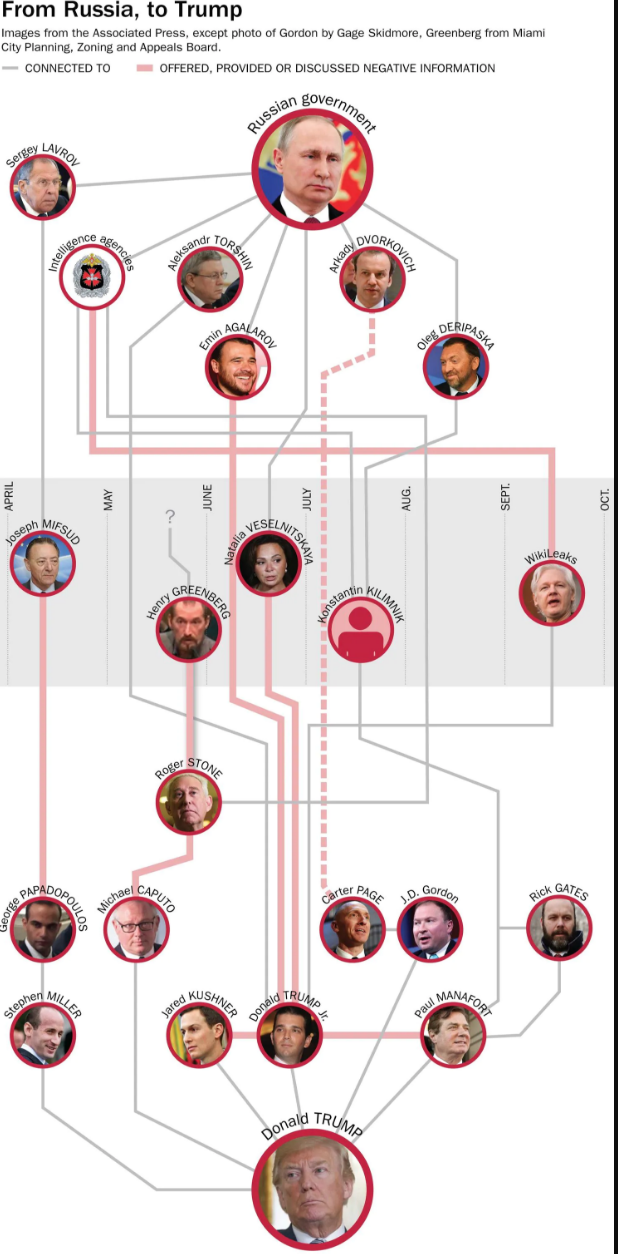
Manuel Roig-Franzia and Rosalind S. Helderman report Trump associate Roger Stone reveals new contact with Russian national during 2016 campaign:

The meeting took place two months earlier than federal officials have said a counterintelligence operation was officially opened and before WikiLeaks began releasing hacked Democratic emails.

It came in the same time period as other episodes in which Russian interests approached the Trump campaign. A few weeks earlier, Trump campaign foreign policy adviser George Papadopoulos was told in London that the Russians had dirt on Clinton. And it was two weeks before the sit-down at Trump Tower between Donald Trump Jr. and a Russian lawyer who he had been told could offer information that would hurt Clinton as part of a Russian government effort to help his father.

Philip Bump reports At least six people close to Trump almost certainly knew about offers from Russians of dirt on Clinton:

On Sunday, The Washington Post reported on a previously unknown point of contact between the 2016 Donald Trump campaign and a Russian offering negative information about Hillary Clinton. That new report, involving a Trump campaign staff member and longtime Trump ally Roger Stone, means that at least six members of Trump’s broader team knew about offers of dirt from Russians during that campaign — and, depending on how that information was shared, as many as 10 may have, including Trump.

In March, we looked at the various ways in which members of Trump’s extended teams had been approached by agents of the Russian government during the campaign. It was a complicated web at that point — a web that has since grown only more intricate. In the graphic below, the gray box indicates the connections between Russians (top) and Trump’s team (bottom), arrayed relative to when they occurred in 2016. Individuals at the top and the bottom are arrayed in relative proximity to Trump and the Russian government.

Juliette Michel reports US farmers stressed, angry at trade wars:

US farmers find themselves in the crosshairs of a trade war with China and others launched by President Donald Trump, who was elected with the support of many in rural America.

On Friday, Trump announced long-threatened trade tariffs on tens of billions of dollars worth of Chinese goods, sparking an immediate retaliation from Beijing on an equivalent of US products including agricultural goods, notably soy.

“For American farmers, this isn’t theoretical anymore, it’s downright scary,” the Farmers for Free Trade lobbying group said of the prospects for escalating tariffs.

Mark Mazzetti and Mark Landler report North Korea’s Overture to Jared Kushner (“An American businessman who lives in Singapore took advantage of an unusual opening in an administration where matters of policy and business often seem to blur”):

WASHINGTON — An American financier approached the Trump administration last summer with an unusual proposition: The North Korean government wanted to talk to Jared Kushner, the president’s son-in-law and senior adviser.

The financier, Gabriel Schulze, explained that a top North Korean official was seeking a back channel to explore a meeting between President Trump and Kim Jong-un, who for months had traded threats of military confrontation. Mr. Schulze, who lives in Singapore, had built a network of contacts in North Korea on trips he had taken to develop business opportunities in the isolated state.

For some in North Korea, which has been ruled since its founding by a family dynasty, Mr. Kushner appeared to be a promising contact. As a member of the president’s family, officials in Pyongyang judged, Mr. Kushner would have the ear of his father-in-law and be immune from the personnel changes that had convulsed the early months of the administration.

Tech Insider shows How Prosthetic Skin Is Made For Bionic Limbs:

Gill v. Whitford

Below, I’ve embedded the full decision in Gill v. Whitford, a much-awaited decision concerning partisan gerrymandering in Wisconsin. The decision was handed down this morning.

The case was remanded for lack of standing.  Immediately below, readers will find the syllabus for the case, a summary that’s useful to review before reading the opinion.  (“NOTE: Where it is feasible, a syllabus (headnote) will be released, as is being done in connection with this case, at the time the opinion is issued. The syllabus constitutes no part of the opinion of the Court but has been prepared by the Reporter of Decisions for the convenience of the reader. See United States v. Detroit Timber & Lumber Co., 200 U. S. 321, 337.”)

One can expect considerable legal commentary about the case from across the country.

Syllabus:

Gill et al. v. Whitford et al.

Appeal from the United States District Court for the Western District of Wisconsin

No. 16–1161.?Argued October 3, 2017—Decided June 18, 2018

Members of the Wisconsin Legislature are elected from single-member legislative districts. Under the Wisconsin Constitution, the legislature must redraw the boundaries of those districts following each census. After the 2010 census, the legislature passed a new districting plan known as Act 43. Twelve Democratic voters, the plaintiffs in this case, alleged that Act 43 harms the Democratic Party’s ability to convert Democratic votes into Democratic seats in the legislature. They asserted that Act 43 does this by “cracking” certain Democratic voters among different districts in which those voters fail to achieve electoral majorities and “packing” other Democratic voters in a few districts in which Democratic candidates win by large margins. The plaintiffs argued that the degree to which packing and cracking has favored one political party over another can be measured by an “efficiency gap” that compares each party’s respective “wasted” votes—i.e., votes cast for a losing candidate or for a winning candidate in excess of what that candidate needs to win—across all legislative districts. The plaintiffs claimed that the statewide enforcement of Act 43 generated an excess of wasted Democratic votes, thereby violating the plaintiffs’ First Amendment right of association and their Fourteenth Amendment right to equal protection. The defendants, several members of the state election commission, moved to dismiss the plaintiffs’ claims. They argued that the plaintiffs lacked standing to challenge the constitutionality of Act 43 as a whole because, as individual voters, their legally protected interests extend only to the makeup of the legislative district in which they vote. The three-judge District Court denied the defendants’ motion and, following a trial, concluded that Act 43 was an unconstitutional partisan gerrymander. Regarding standing, the court held that the plaintiffs had suffered a particularized injury to their equal protection rights.

Held: The plaintiffs have failed to demonstrate Article III standing. Pp. 8–22.

(a) Over the past five decades this Court has repeatedly been asked to decide what judicially enforceable limits, if any, the Constitution sets on partisan gerrymandering. Previous attempts at an answer have left few clear landmarks for addressing the question and have generated conflicting views both of how to conceive of the injury arising from partisan gerrymandering and of the appropriate role for the Federal Judiciary in remedying that injury. See Gaffney v. Cummings, 412 U. S. 735Davis v. Bandemer, 478 U. S. 109Vieth v. Jubelirer, 541 U. S. 267, and League of United Latin American Citizens v. Perry, 548 U. S. 399. Pp. 8–12.

(b) A plaintiff may not invoke federal-court jurisdiction unless he can show “a personal stake in the outcome of the controversy,” Baker v. Carr369 U. S. 186, 204. That requirement ensures that federal courts “exercise power that is judicial in nature,” Lance v. Coffman549 U. S. 437, 439, 441. To meet that requirement, a plaintiff must show an injury in fact—his pleading and proof that he has suffered the “invasion of a legally protected interest” that is “concrete and particularized,” i.e., which “affect[s] the plaintiff in a personal and individual way.” Lujan v. Defenders of Wildlife, 504 U. S. 555, 560, and n. 1.

The right to vote is “individual and personal in nature,” Reynolds v. Sims, 377 U. S. 533, 561, and “voters who allege facts showing disadvantage to themselves as individuals have standing to sue” to remedy that disadvantage, Baker, 369 U. S., at 206. The plaintiffs here alleged that they suffered such injury from partisan gerrymandering, which works through the “cracking” and “packing” of voters. To the extent that the plaintiffs’ alleged harm is the dilution of their votes, that injury is district specific. An individual voter in Wisconsin is placed in a single district. He votes for a single representative. The boundaries of the district, and the composition of its voters, determine whether and to what extent a particular voter is packed or cracked. A plaintiff who complains of gerrymandering, but who does not live in a gerrymandered district, “assert[s] only a generalized grievance against governmental conduct of which he or she does not approve.”United States v. Hays515 U. S. 737, 745.

The plaintiffs argue that their claim, like the claims presented in Baker and Reynolds, is statewide in nature. But the holdings in those cases were expressly premised on the understanding that the injuries giving rise to those claims were “individual and personal in nature,” Reynolds, 377 U. S., at 561, because the claims were brought by voters who alleged “facts showing disadvantage to themselves as individuals,” Baker, 369 U. S., at 206. The plaintiffs’ mistaken insistence that the claims in Baker and Reynolds were “statewide in nature” rests on a failure to distinguish injury from remedy. In those malapportionment cases, the only way to vindicate an individual plaintiff’s right to an equally weighted vote was through a wholesale “restructuring of the geographical distribution of seats in a state legislature.”Reynolds, 377 U. S., at 561. Here, the plaintiffs’ claims turn on allegations that their votes have been diluted. Because that harm arises from the particular composition of the voter’s own district, remedying the harm does not necessarily require restructuring all of the State’s legislative districts. It requires revising only such districts as are necessary to reshape the voter’s district. This fits the rule that a “remedy must of course be limited to the inadequacy that produced the injury in fact that the plaintiff has established.” Lewis v. Casey518 U. S. 343, 357.

The plaintiffs argue that their legal injury also extends to the statewide harm to their interest “in their collective representation in the legislature,” and in influencing the legislature’s overall “composition and policymaking.” Brief for Appellees 31. To date, however, the Court has not found that this presents an individual and personal injury of the kind required for Article III standing. A citizen’s interest in the overall composition of the legislature is embodied in his right to vote for his representative. The harm asserted by the plaintiffs in this case is best understood as arising from a burden on their own votes. Pp. 12–17.

(c) Four of the plaintiffs in this case pleaded such a particularized burden. But as their case progressed to trial, they failed to pursue their allegations of individual harm. They instead rested their case on their theory of statewide injury to Wisconsin Democrats, in support of which they offered three kinds of evidence. First, they presented testimony pointing to the lead plaintiff’s hope of achieving a Democratic majority in the legislature. Under the Court’s cases to date, that is a collective political interest, not an individual legal interest. Second, they produced evidence regarding the mapmakers’ deliberations as they drew district lines. The District Court relied on this evidence in concluding that those mapmakers sought to understand the partisan effect of the maps they were drawing. But the plaintiffs’ establishment of injury in fact turns on effect, not intent, and requires a showing of a burden on the plaintiffs’ votes that is “actual or imminent, not ‘conjectural’ or ‘hypothetical.’ ” Defenders of Wildlife, 504 U. S., at 560. Third, the plaintiffs presented partisan-asymmetry studies showing that Act 43 had skewed Wisconsin’s statewide map in favor of Republicans. Those studies do not address the effect that a gerrymander has on the votes of particular citizens. They measure instead the effect that a gerrymander has on the fortunes of political parties. That shortcoming confirms the fundamental problem with the plaintiffs’ case as presented on this record. It is a case about group political interests, not individual legal rights. Pp. 17–21.

(d) Where a plaintiff has failed to demonstrate standing, this Court usually directs dismissal. See, e.g.DaimlerChrysler Corp. v. Cuno,547 U. S. 332, 354. Here, however, where the case concerns an unsettled kind of claim that the Court has not agreed upon, the contours and justiciability of which are unresolved, the case is remanded to the District Court to give the plaintiffs an opportunity to prove concrete and particularized injuries using evidence that would tend to demonstrate a burden on their individual votes. Cf. Alabama Legislative Black Caucus v. Alabama, 575 U. S. ___, ___. Pp. 21–22.

218 F. Supp. 3d 837, vacated and remanded.

Roberts, C. J., delivered the opinion of the Court, in which KennedyGinsburgBreyerAlitoSotomayor, and Kagan, JJ., joined, and in which Thomas and Gorsuch, JJ., joined except as to Part III. Kagan, J., filed a concurring opinion, in which GinsburgBreyer, and Sotomayor, JJ., joined. Thomas, J., filed an opinion concurring in part and concurring in the judgment, in which Gorsuch, J., joined.

Opinion:

[embeddoc url=”https://freewhitewater.com/wp-content/uploads/2018/06/16-1161_dc8f.pdf” width=”100%” download=”all” viewer=”google”]

Film: Wednesday, June 20th, 12:30 PM @ Seniors in the Park, Call Me By Your Name

This Wednesday, June 20th at 12:30 PM, there will be a showing of Call Me By Your Name @ Seniors in the Park, in the Starin community building.

Luca Guadagnino directs the two-hour, seventeen minute film set in 1980s Italy, about a “romance that blossoms between a seventeen year-old student and the older man hired as his father’s research assistant.”

The cast features Armie Hammer, Timothée Chalamet, and Michael Stuhlbarg, and the film is rated R by the MPAA (sexual content, nudity, language). Call Me By Your Name received Oscar nominations for Best Film, Best Actor (Chalamet), Best Song, and was the winner for Best Adapted Screenplay.

It’s the first of Seniors in the Park annual summer series of foreign/art/documentary films that will be shown June through September.

One can find more information about Call Me By Your Name at the Internet Movie Database.

Enjoy.

Daily Bread for 6.18.18

Good morning.

Monday in Whitewater will see a high of eighty-seven and a chance of  an afternoon thunderstorm.  Sunrise is 5:16 AM and sunset 8:36 PM, for 15h 20m 17s of daytime.  The moon is a waxing crescent with 29.4% of its visible disk illuminated.

Today is the five hundred eighty-fourth day.Days since Trump’s election, with 11.9.16 as the first day.

Whitewater’s Library Board meets this evening at 6:30 PM.


The War of 1812 begins two-hundred six years ago on this day.

Recommended for reading in full — Attorney General Sessions’s misuse of scripture

 The Rev. Dr. Margaret Aymer and Laura Nasrallah write What Jeff Sessions got wrong when quoting the Bible:

A complete reading and understanding of Romans 13 — and the Bible more broadly — reveals more love and care for neighbors and immigrants than Attorney General Jeff Sessions would have us believe. On June 14, Sessions spoke in Fort Wayne, Ind., to a group that included law enforcement officers and others in the community. His remarks directly addressed “religious leaders” and “church friends.” Sessions used the words of the apostle Paul to justify current policies of separating children from parents, as families seek to enter the United States:

“Illegal entry into the United States is a crime — as it should be,” he said. “Persons who violate the law of our nation are subject to prosecution. I would cite you to the apostle Paul and his clear and wise command in Romans 13 to obey the laws of the government because God has ordained them for the purpose of order.”

….

We write as biblical scholars and as Christians to argue that Sessions has misused this passage from Romans.

First, the Bible shouldn’t — and can’t — be used to argue against immigration. Passages from Exodus, Leviticus, Deuteronomy and the prophets argue for care for the stranger and the immigrant: “When an alien resides with you in your land, you shall not oppress the alien. The alien who resides with you shall be to you as the citizen among you; you shall love the alien as yourself, for you were aliens in the land of Egypt: I am the LORD your God” (Leviticus 19:33-34 NRSV).

We can turn to the New Testament, as well. Jesus’ words as cited in the parable of the Good Samaritan call Christians to ask “Who is my neighbor?” (Luke 10:29). These words demand that we expand our definition of neighbor — as did the Samaritan — to include the stranger and the foreigner, and that we serve that neighbor with our own time and financial resources.

Second, Romans 13 is the most-cited text in the Bible in debates in revolutionary America, according to James P. Byrd’s “Sacred Scripture, Sacred War: The Bible and the American Revolution.”Christians then knew that the passage might be read to demand loyalty to Britain. So instead they read this passage to argue that they should obey only just rulers, not tyrants, and that just rulers supported liberty. They used it to argue that the Bible spoke for freedom.

….

Finally, if we do take Romans 13 as a keystone for action, then we have to put the small portion Sessions quotes within a larger context. The apostle Paul also argues in the same passage that all commandments are summed up in the teaching “Love your neighbor as yourself” (Romans 13:9). Paul continues, pointedly, “Love does no wrong to a neighbor; therefore, love is the fulfilling of the law” (Romans 13:10). Paul here echoes the law (Leviticus 19:18) and teachings of Jesus (Matthew 22:19). This is a central message of the scriptures.

 Elizabeth Bruenig writes Sessions invents a faith all his own:

Here, whether deliberately or unknowingly, Sessions and Sanders radically depart from the Christian religion, inventing a faith that makes order itself the highest good and authorizes secular governments to achieve it. In Christianity as billions of faithful have known it, order and lawful procedures are not “good in themselves” and it is not “very biblical” to “enforce the law” whatever it might be. Rather, there is a natural order inscribed into nature. Human governance can comport with it or contradict it, meaning Christians are sometimes morally obligated to follow civil laws and are sometimes morally obligated not to.

Conservatives seize on this approach when it suits them; this is why they’re so keen on carving out legal protections for matters of religious conscience. Because religious obligations precede and generate civic ones, laws must accommodate religious practice, not the other way around.

….

But there are worse things than confusion, or even than hypocrisy. One of them is self-deception. When Sessions invoked Romans 13 — a verse infamous for earlier bad-faith invocations to justify slavery — he shifted the subject of the question from himself and his own department to those under his control. He was summoned to defend his choices, his judgment, his own moral reasoning — but instead offered a condemnation of the decisions and morality of migrants. He wanted to talk about what, in his view, the Bible demands of the ruled. But he omitted the more important question: What does it demand of rulers?

Any number of scriptural passages are available here, though less useful for Sessions’s purposes. From Deuteronomy 10 : “For the Lord your God …. loves the strangers, providing them food and clothing. You shall also love the stranger, for you were strangers in the land of Egypt.” Or from Jeremiah 7: “If you really change your ways and your actions and deal with each other justly, if you do not oppress the foreigner, the fatherless or the widow and do not shed innocent blood in this place …. then I will let you live in this place, in the land I gave your ancestors for ever and ever.” Dealing compassionately with strangers seems to be a minimal requirement for just leadership in the model set forth by God, a theme that carries into the New Testament, where Christ’s followers are taught to view themselves as wanderers on earth, and to treat others with appropriate empathetic mercy.

But some Christians aren’t strangers in the world at all. Some are very much at home here, or believe that they are, and that there is no tension between the desire of God and the desire of man. People can believe any number of things, especially given the right incentives.

If you had all the power in the world, maybe you would also hear a serpent dipping its smooth body down from some shadowy bough to say: God wants you to do whatever you like with your power, and whatever you do with it is good.

Jennifer Rubin writes Leave the Bible out of it, child separation is not ‘Christian’:

I’m no expert in Christianity, but the Rev. Martin Luther King Jr. was when he drafted his letter from the Birmingham jail:

Since we so diligently urge people to obey the Supreme Court’s decision of 1954 outlawing segregation in the public schools, at first glance it may seem rather paradoxical for us consciously to break laws. One may well ask: “How can you advocate breaking some laws and obeying others?” The answer lies in the fact that there are two types of laws: just and unjust. I would be the first to advocate obeying just laws. One has not only a legal but a moral responsibility to obey just laws. Conversely, one has a moral responsibility to disobey unjust laws. I would agree with St. Augustine that “an unjust law is no law at all.”

Now, what is the difference between the two? How does one determine whether a law is just or unjust? A just law is a man made code that squares with the moral law or the law of God. An unjust law is a code that is out of harmony with the moral law. To put it in the terms of St. Thomas Aquinas: An unjust law is a human law that is not rooted in eternal law and natural law. Any law that uplifts human personality is just. Any law that degrades human personality is unjust.

Sessions perfectly exemplifies how religion should not be used. Pulling out a Bible or any other religious text to say it supports one’s view on a matter of public policy is rarely going to be effective, for it defines political opponents as heretics.

The bishops and other religious figures are speaking out as their religious conscience dictates, which they are morally obligated to do and are constitutionally protected in doing. A statement from the conference of bishops, to which Sessions objected, read in part:

At its core, asylum is an instrument to preserve the right to life. The Attorney General’s recent decision elicits deep concern because it potentially strips asylum from many women who lack adequate protection. These vulnerable women will now face return to the extreme dangers of domestic violence in their home country. This decision negates decades of precedents that have provided protection to women fleeing domestic violence.

Reminding the administration of the meaning of family values, the bishops continued, “Families are the foundational element of our society and they must be able to stay together. While protecting our borders is important, we can and must do better as a government, and as a society, to find other ways to ensure that safety. Separating babies from their mothers is not the answer and is immoral.”

Fr. James Martin writes in a thread on Twitter:

Like many, I’ve resisted using this word but it’s time: the deliberate and unnecessary separation of innocent children from their parents is pure evil. It does not come from God or from any genuinely moral impulse. It is wantonly cruel and targets the most vulnerable.

Its use has been cloaked in lies, another clear sign that it does not proceed in any way from God or from a genuinely moral impulse. And the results–misery, anguish, physical suffering, division and despair–are also unmistakable signs that this is an evil.

As St. Paul wrote, “You will know them by their fruits….every good tree bears good fruit, but the bad tree bears bad fruit.” (Mt 7:17). That is, the results enable us to clearly recognize evil. As such, we have a moral obligation to name it and fight against it.

Anyone who participates in this kind of wanton cruelty is also guilty of this evil. “I was just following orders” went out at Nuremberg. The decision-makers and all who cooperate in these actions will be judged.

“I was a stranger and you did not welcome me.” (Mt 25)

Fr. James Martin further explains What Does the Bible Say? Refugees, migrants and foreigners:

Daily Bread for 6.17.18

Good morning.

Father’s Day in Whitewater will be a sunny day with a high of ninety-two.  Sunrise is 5:15 AM and sunset 8:36 PM, for 15h 20m 07s of daytime.  The moon is a waxing crescent with 19.4% of its visible disk illuminated.

Today is the five hundred eighty-third day.Days since Trump’s election, with 11.9.16 as the first day.


On this day in 1885,  the Statue of Liberty arrives in New York harbor “aboard the French frigate Isère — in 214 crates that held the disassembled gift from the people of France. Nearly a quarter-of-a-million onlookers lined Battery Park, while hundreds of boats pulled into the harbor to welcome the Isère.”

Recommended for reading in full — articles on immigration policy — 

Julie Hirschfeld Davis reports Trump Again Falsely Blames Democrats for His Separation Tactic:

President Trump on Saturday repeated his false assertion that Democrats were responsible for his administration’s policy of separating migrant families apprehended at the border, sticking to a weeks long refusal to publicly accept responsibility for a widely condemned practice that has become a symbol of his crackdown on illegal immigration.

“Democrats can fix their forced family breakup at the Border by working with Republicans on new legislation, for a change!” Mr. Trump said in a morning post on Twitter.

It came the day after his administration said that it had taken nearly 2,000 children away from their parents in a six-week period ending last month, as part of a new “zero tolerance” policy that refers for criminal prosecution all immigrants apprehended crossing the border without authorization.

The White House defended the practice this week, saying the president was merely enforcing the law. And in recent speeches around the country, Jeff Sessions, the attorney general, has made a spirited case for it, arguing that a strict approach is a vital tool for deterrence.

Katy Vine recounts What’s Really Happening When Asylum-Seeking Families Are Separated (“An expert [Anne Chandler] on helping parents navigate the asylum process describes what she’s seeing on the ground”):

There is no one process. Judging from the mothers and fathers I’ve spoken to and those my staff has spoken to, there are several different processes. Sometimes they will tell the parent, “We’re taking your child away.” And when the parent asks, “When will we get them back?” they say, “We can’t tell you that.” Sometimes the officers will say, “because you’re going to be prosecuted” or “because you’re not welcome in this country,” or “because we’re separating them,” without giving them a clear justification.

In other cases, we see no communication that the parent knows that their child is to be taken away. Instead, the officers say, “I’m going to take your child to get bathed.” That’s one we see again and again. “Your child needs to come with me for a bath.” The child goes off, and in a half an hour, twenty minutes, the parent inquires, “Where is my five-year-old?” “Where’s my seven-year-old?” “This is a long bath.” And they say, “You won’t be seeing your child again.” Sometimes mothers—I was talking to one mother, and she said, “Don’t take my child away,” and the child started screaming and vomiting and crying hysterically, and she asked the officers, “Can I at least have five minutes to console her?” They said no.

In another case, the father said, “Can I comfort my child? Can I hold him for a few minutes?” The officer said, “You must let them go, and if you don’t let them go, I will write you up for an altercation, which will mean that you are the one that had the additional charges charged against you.” So, threats. So the father just let the child go. So it’s a lot of variations. But sometimes deceit and sometimes direct, just “I’m taking your child away.”

Parents are not getting any information on what their rights are to communicate to get their child before they are deported, what reunification may look like. We spoke to nine parents on this Monday, which was the 11th, and these were adults in detention centers outside of Houston. They had been separated from their child between May 23 and May 25, and as of June 11, not one of them had been able to talk to their child or knew a phone number that functioned from the detention center director. None of them had direct information from immigration on where their child was located. The one number they were given by some government official from the Department of Homeland Security was a 1-800 number. But from the phones inside the detention center, they can’t make those calls.

Kristine Phillips reports ‘America is better than this’: What a doctor saw in a Texas shelter for migrant children:

Kraft, president of the American Academy of Pediatrics, said colleagues who were alarmed by what was going on at the border invited her to see for herself, so she visited a shelter run by the Office of Refugee Resettlement.

“We needed to see what was happening and tell the country and the world about it,” she said.

One thing immediately became clear to Kraft: Those who work at this shelter, whom she declined to name for privacy reasons, were doing what they could to make sure the children’s needs are met. The children were fed; they had beds, toys, a playground and people who change their diapers. But there are limits to what workers could do. Not only could they not pick up or touch the children; they could not get their parents for them.

“The really basic, foundational needs of having trust in adults as a young child was not being met. That contradicts everything we know that the kids need to build their health,” Kraft said.

[‘Where’s Mommy?’: A family fled death threats, only to face separation at the border.]

Such a situation could have long-term, devastating effects on young children, who are likely to develop what is called toxic stress in their brain once separated from caregivers or parents they trusted. It disrupts a child’s brain development and increases the levels of fight-or-flight hormones in their bodies, Kraft said. This kind of emotional trauma could eventually lead to health problems, such as heart disease and substance abuse disorders.

The United States Conference of Catholic Bishops issused a Statement from Daniel Cardinal DiNardo:

Fort Lauderdale, FL—”At its core, asylum is an instrument to preserve the right to life. The Attorney General’s recent decision elicits deep concern because it potentially strips asylum from many women who lack adequate protection. These vulnerable women will now face return to the extreme dangers of domestic violence in their home country. This decision negates decades of precedents that have provided protection to women fleeing domestic violence. Unless overturned, the decision will erode the capacity of asylum to save lives, particularly in cases that involve asylum seekers who are persecuted by private actors. We urge courts and policy makers to respect and enhance, not erode, the potential of our asylum system to preserve and protect the right to life.

Additionally, I join Bishop Joe Vásquez, Chairman of USCCB’s Committee on Migration, in condemning the continued use of family separation at the U.S./Mexico border as an implementation of the Administration’s zero tolerance policy. Our government has the discretion in our laws to ensure that young children are not separated from their parents and exposed to irreparable harm and trauma. Families are the foundational element of our society and they must be able to stay together. While protecting our borders is important, we can and must do better as a government, and as a society, to find other ways to ensure that safety. Separating babies from their mothers is not the answer and is immoral.”

The United Church of Christ issues U.S. interfaith leaders urge government to #KeepFamiliesTogether:

Recently, the Administration announced that it will begin separating families and criminally prosecuting all people who enter the U.S. without previous authorization. As religious leaders representing diverse faith perspectives, united in our concern for the wellbeing of vulnerable migrants who cross our borders fleeing from danger and threats to their lives, we are deeply disappointed and pained to hear this news.

We affirm the family as a foundational societal structure to support human community and understand the household as an estate blessed by God. The security of the family provides critical mental, physical and emotional support to the development and wellbeing of children. Our congregations and agencies serve many migrant families that have recently arrived in the United States. Leaving their communities is often the only option they have to provide safety for their children and protect them from harm. Tearing children away from parents who have made a dangerous journey to provide a safe and sufficient life for them is unnecessarily cruel and detrimental to the well-being of parents and children.

As we continue to serve and love our neighbor, we pray for the children and families that will suffer due to this policy and urge the Administration to stop their policy of separating families.

Charles C. Camosy, of Democrats for Life, writes that You Can’t Be Pro-Life and Against Immigrant Children:

We are in the midst of a serious crisis for vulnerable children and families, though, and these “pro-life, pro-family” organizations have been largely silent.

The crisis is the Trump administration’s practice of separating children from undocumented parents, even when the families are asking for asylum. In one particularly horrific case, a mother said that her baby was taken from her while she was breast-feeding.

The number of children being taken is so large that the administration, using the fear these children must feel as a means of deterring undocumented immigration, is apparently building “tent cities” around military bases to house them.

Given their support of the administration, and an unwillingness to speak critically about immigration policy, “pro-life, pro-family” organizations now risk being tied to these and other horrific practices.

Psychologist J. A. Coan writes The Trump administration is committing violence against children:

As a clinical psychologist and neuroscientist at the University of Virginia, I study how the brain transforms social connection into better mental and physical health. My research suggests that maintaining close ties to trusted loved ones is a vital buffer against the external stressors we all face. But not being an expert on how this affects children, I recently invited five internationally recognized developmental scientists to chat with me about the matter on a science podcast I host. As we discussed the border policy’s effect on the children ensnared by it, even I was surprised to learn just how damaging it is likely to be.

At minimum, forced separation will cause these children extreme emotional distress. Most of us know this intuitively. Less intuitive, as Nim Tottenham of Columbia University told me, is that “the sadness is not the thing that really matters here. What matters is this is a trauma to the developing nervous system.” Extreme emotional responses to separation from parents is part of evolution’s plan to keep those parents close — to “break any parent’s heart,” as Megan Gunnar of the University of Minnesota said. That’s because throughout human evolution, an absent caregiver has meant almost certain death. Jude Cassidy of the University of Maryland put it best: When faced with separation from loved ones, “we fight as if it’s a matter of life and death, because it is.”

But little minds and hearts can maintain that level of distress only for so long before the children face a horrifying decision: Continue, through severe emotional pain, to call out for their parents, or proceed on the assumption that their parents are gone. As Dylan Gee of Yale University explained, for those who choose the latter path, their brains will start down a course of “accelerated development” — they’ll mature more quickly. The problem is that rapid maturation often comes at the cost of cognitive and emotional inflexibility later on, as well as the assumption that the world is extremely dangerous and threats must be avoided automatically, without thinking.

more >>

Daily Bread for 6.16.18

Good morning.

Saturday in Whitewater will see a sunny day with a high of ninety-two.  Sunrise is 5:15 AM and sunset 8:35 PM, for 15h 19m 53s of daytime.  The moon is a waxing crescent with 11% of its visible disk illuminated.

Today is the five hundred eighty-second day.Days since Trump’s election, with 11.9.16 as the first day.


On this day in 1903,  Ford Motor Company is incorporated.

Recommended for reading in full —

 Philip Rucker describes Dictator envy’: Trump’s praise of Kim Jong Un widens his embrace of totalitarian leaders:

President Trump’s praise Friday for Kim Jong Un’s authoritarian rule in North Korea — and his apparent envy that people there “sit up at attention” when the 35-year-old dictator speaks — marked an escalation of the American president’s open embrace of totalitarian leaders around the world.

Reflecting on his impressions of Kim following their Singapore summit, Trump told Fox News: “He’s the head of a country, and I mean he’s the strong head. Don’t let anyone think anything different. He speaks, and his people sit up at attention. I want my people to do the same.”

It was unclear whether Trump was referring to Americans generally or only to his staff. His interview took place along the West Wing driveway, and as the president talked about “my people,” he gestured toward the White House.

Later, when pressed by a CNN reporter about the comment, Trump claimed it had been a joke. “I’m kidding,” he said. “You don’t understand sarcasm.”

Whether jesting or not, no U.S. president has been as free in his admiration of dictators and absolute power as the 45th, historians say. And Trump’s interest in the subject seems to be growing as he becomes better acquainted with some of the world’s authoritarian leaders, including Kim, Chinese President Xi Jinping and Russian President Vladi­mir Putin, whom Trump said he may try to meet one-on-one this summer.

(Trumpism has three fundamental characteristics: authoritarianism, bigotry, and a license to self-dealing by leading operatives.)

 Jennifer Rubin writes Reporting on Trump’s lies requires identifying the lies:

MSNBC’s Rachel Maddow touched off an interesting social media debate when she suggested that because her obligation is to tell her viewers the truth, she tries not to quote President Trump. “Because I generally feel like I can’t trust what purports to be information from this president, I just try to do the news without words from him, most of the time.”

Ah, to live in a world without listening to Trump’s voice or reading his blatant, infuriating lies! But how do news outlets fairly tell viewers and readers what Trump is lying about if they don’t tell them about the lies?

The problem, I would suggest, is the way Trump’s lies are presented. The most mind-numbing version of this consists of repeating the lie, with the addition “Trump says.” For example: “North Korean leader is smart and handsome, Trump says.” Now that’s a fictional example (I hope), but it’s not helpful insofar it does not explain why that pronouncement is newsworthy: not because Kim Jong Un really is smart and handsome, but because Trump is trying to spin the world by elevating a murderous tyrant and whitewashing crimes against humanity. What’s important is Trump revealing himself to either be a liar or deluded — which doesn’t require quoting the president. The better headline would be, “Trump heaps praise on notorious dictator.”

Jeff Horwitz reports They were brought down by the Facebook privacy scandal. Now they’re working for Trump’s 2020 re-election:

A company run by former officials at Cambridge Analytica, the political consulting firm brought down by a scandal over how it obtained Facebook users’ private data, has quietly been working for President Donald Trump’s 2020 re-election effort, The Associated Press has learned.

The AP confirmed that at least four former Cambridge Analytica employees are affiliated with Data Propria, a new company specializing in voter and consumer targeting work similar to Cambridge Analytica’s efforts before its collapse. The company’s former head of product, Matt Oczkowski, leads the new firm, which also includes Cambridge Analytica’s former chief data scientist.

Oczkowski denied a link to the Trump campaign, but acknowledged that his new firm has agreed to do 2018 campaign work for the Republican National Committee. Oczkowski led the Cambridge Analytica data team which worked on Trump’s successful 2016 campaign.

The AP learned of Data Propria’s role in Trump’s re-election effort as a result of conversations held with political contacts and prospective clients in recent weeks by Oczkowski. In one such conversation, which took place in a public place and was overheard by two AP reporters, Oczkowski said he and and Trump’s 2020 campaign manager, Brad Parscale, were “doing the president’s work for 2020.”

Heather Long observes Trump is betting American families are willing to pay for his trade war:

This is no longer a war of words between Trump and China. There are actual economic consequences now. The result is that Americans will almost certainly face higher costs as companies pay more for parts they need to build cars, dishwashers and tractors, and then firms turn around and pass those higher prices onto consumers.

All of Trumps tariffs so far — on China, on steel and aluminum, on washing machines and on solar panels — will end up costing the average U.S. family $80 a year, Moody’s Analytics estimates in a report to be released next week. If Trump continues to pile tariffs on China (he has threatened to do another $100 billion) and China retaliates, then the cost to the average family would rise to $210, according to Mark Zandi, chief economist at Moody’s Analytics. Wall Street bank Goldman Sachs has also forecast rising prices from the tariffs.

The Tax Foundation, a think tank that supported Trump’s tax lawpredicts that more than 45,000 jobs will be lost because of the tariffs Trump has issued so far. They also forecast a small hit to the economy and wages. Analysts Kyle Pomerleau and Erica York argue that the tariffs will hurt the economy because prices will rise, reducing profits for companies and costing consumers more. Alternatively, tariffs could cause the U.S. dollar to rise, which usually makes it more difficult for American companies to sell their products abroad, another potential hit to jobs and the economy.

(Emphasis added.  Even an organization that supported Trump’s tax bill contends that tens of thousands will be unemployed under his trade policy.)

 Ponder The Art of Fishing With Birds:

Along the scenic Lijiang River in China, brothers Huang Yuechang and Huang Mingde have been keeping up a centuries-old tradition of fishing with cormorant birds. Forgoing nets and modern fishing poles, these brothers have cultivated relationships with their birds in a way that’s found them success in cormorant fishing for more than six decades. But with no young fishermen choosing this ancient method, they may be the last ones to carry on this rare Chinese tradition.

Daily Bread for 6.15.18

Good morning.

Friday in Whitewater will see a morning thundershower and a high of eighty-nine.  Sunrise is 5:15 AM and sunset 8:35 PM, for 15h 19m 35s of daytime.  The moon is a waxing crescent with 4.6% of its visible disk illuminated.

Today is the five hundred eighty-first day.Days since Trump’s election, with 11.9.16 as the first day.


On this day in 1215,  King John of England agrees to, and so places his seal on, the Magna Carta.

Recommended for reading in full —

 Keegan Kyle reports Wisconsin county left 26 rape kits untested when Attorney General Schimel was the DA:

WAUKESHA – As Waukesha County district attorney, Brad Schimel allowed at least 26 rape kits to remain untested, adding to a statewide backlog he is now vowing to clear out as Wisconsin attorney general.

In one case with an untested kit, a 3-year-old girl’s parents worried she was molested at a party. In another, a teen reported falling asleep and waking up to a friend raping her. In a third, a homeless mother reported being raped at a motel near popular shopping centers.

USA TODAY NETWORK-Wisconsin identified the 26 kits by obtaining more than a dozen documents from Waukesha County police agencies under state open records laws. They are among 86 rape kits left untested in Waukesha County since 2002.

See also, from Keegan on 6.14.18, Delays, blunders and police neglect in Wisconsin’s response to rape kits.

Garry Kasparov ponders World Cup 2018 and the ugly side of the beautiful game:

It’s just as clear why FIFA and the IOC like having their events hosted by autocratic regimes, despite their tired pabulum about ideals. In the wake of the Sepp Blatter-era corruption scandals, FIFA is moving to make the World Cup bidding process more transparent. This is laudable, although my personal experience battling the international chess federation, FIDE, taught that these transparency initiatives are often designed to buy time to find better ways to hide the money. International sports organizations often exploit a legal limbo between jurisdictions, a quasi-diplomatic status that is easily abused.

What is to be done? As a sportsman who represented my country for decades, the Soviet Union and then Russia — and yes, chess is sport if you’re doing it right — I have trouble with boycotts that unfairly punish athletes. Had a unified international response against Russia hosting the World Cup come early enough it might have been possible to relocate it. Qatar is still scheduled to host the Cup in 2022 despite numerous abuses and scandals, and after North Korea’s propaganda coup at the PyeongChang Winter Games this year, it’s clear that collective response is a lost cause.

Everyone moves on to the next event, the next crisis. Russia has already been forgiven for the worst doping scandal in history. FIFA’s massive 2015 corruption case is still in the courts.

In Sochi, activists used the international media presence to expose Russia’s anti-LGBTQ laws, although Putin was quick to clamp down as soon as the Games were over. An environmental activist arrested during the Games was put in prison for two years for spray-painting a protest message on a fence.

But during the World Cup, the police might be relatively cautious in handling foreign visitors and journalists. The bold should exploit this to peek behind the curtain and report truthfully on the dire conditions in Russia.

We can support the beautiful game without supporting the world’s ugliest regimes.

Michael E. Miller, Emma Brown, and Aaron C. Davis report Inside Casa Padre, the converted Walmart where the U.S. is holding nearly 1,500 immigrant children:

 For more than a year, the old Walmart along the Mexican border here has been a mystery to those driving by on the highway. In place of the supercenter’s trademark logo hangs a curious sign: “Casa Padre.”

But behind the sliding doors is a bustling city unto itself, equipped with classrooms, recreation centers and medical examination rooms. Casa Padre now houses more than 1,400 immigrant boys in federal custody. While most are teenagers who entered the United States alone, dozens of others — often younger — were forcibly separated from their parents at the border by a new Trump administration “zero tolerance” policy.

On Wednesday evening, for the first time since that policy was announced — and amid increased national interest after a U.S. senator, Oregon Democrat Jeff Merkley, was turned away — federal authorities allowed a small group of reporters to tour the secretive shelter, the largest of its kind in the nation.

 Matt Wilstein writes ‘Daily Show’ Exposes Sean Hannity’s Trump-Kim Hypocrisy:

Fox News host Sean Hannity has been as enthusiastically supportive of President Donald Trump’s meeting with North Korean dictator Kim Jong Un as you would expect. And the president rewarded him handsomely with an interview from Singapore that will air Tuesday night.

But as The Daily Show expertly demonstrated in an online-only video that hit Twitter just as Hannity’s broadcast began, he was not quite as supportive of handing diplomatic victories to murderous dictators when Barack Obama was in office.

For instance, Hannity said Trump “deserves a lot of credit for being willing to talk to somebody that everybody thought would be a bad idea.” And yet, after Obama shook hands with Raul Castro for the first time in 2013 at Nelson Mandela’s funeral in South Africa, Hannity asked, “Is it just me or does it look like President Obama is more willing to give his time to our enemies than our allies?”

 Meet The World’s Most Elusive Bird:

Daily Bread for 6.14.18

Good morning.

Thursday in Whitewater will be partly sunny with morning shower and a high of eighty-two.  Sunrise is 5:15 AM and sunset 8:34 PM, for 15h 19m 13s of daytime.  The moon is a waxing crescent with 0.7% of its visible disk illuminated.

Today is the five hundred eightieth day.Days since Trump’s election, with 11.9.16 as the first day.


On this day in 1801, Benedict Arnold dies in London.


Recommended for reading in full —

 Keegan Kyle reports Delays, blunders and police neglect in Wisconsin’s response to rape kits:

State investigator Jeff Twing was just trying to find out how many untested rape kits the Vernon County Sheriff’s Department had in its storage room.

The department seemed too busy to count its own kits, so Twing offered to make the two-hour trip northwest from Madison to Viroqua to help.

A litany of excuses followed.

Sheriff’s Deputy Ted Harris said he couldn’t meet with Twing, a Wisconsin Department of Justice agent, because he was out of town that day. Another day, the deputy had dinner plans. And when Twing offered another date, Harris replied that he would be “installing window treatments” for a side job and was unavailable. He suggested Twing could speak with a different deputy in a few weeks.

That was in 2016 — more than two years after the justice department learned that over 6,000 rape kits were sitting, untested, in storage rooms at police stations and hospitals across Wisconsin. The kits can contain evidence vital to catching sexual predators or freeing the wrongly convicted, but had never been sent to state crime labs for analysis.

The Wisconsin Democracy Campaign writes Big Donors Get Big Tax Breaks (“Corporate welfare recipients contributed more than $800,000 to Gov. Walker”):

Owners and employees from about two dozen companies that received corporate welfare from the state in 2017 have contributed more than $800,000 to Republican Gov. Scott Walker’s campaign.

These companies were among the 59 businesses that were awarded nearly $3 billion in economic development tax credits and loans last year by the Wisconsin Economic Development Corp. The giveaways were made so the companies would either locate or expand their operations in the state. Most of the recipients, 50 of 59 (or 85 percent), were businesses already located in Wisconsin.

Owners and employees of 25 companies, which contributed about $809,000 to Walker’s campaign between January 2009 and December 2017, received about $66 million in tax credits or cheap loans. The top contributors and the giveaway the companies received were:

Generac Power Systems, of Waukesha, about $231,000 in contributions. Most of these contributions, $220,000, were made by the company’s founders, Robert and Patricia Kern. The company received a $10 million tax break.

Masters Gallery Foods, of Oostburg. Together with its parent, Sargento, the companies contributed $146,850. Masters Gallery received a $2.5 million tax break.

Johnsonville Sausage, of Sheboygan Falls, about $128,700 in contributions. The company received a $10 million tax break.

Fisher Barton Blades, of Watertown. The company’s parent, Fisher Barton Group, contributed $97,350. Fisher Barton Blades received a $180,000 tax break.

Kwik Trip, of La Crosse, about $91,200 in contributions. Most of these contributions, about $60,400, were made by Kwik Trip owners Don and LaVonne Zietlow. The company received a $21 million tax break.

The top recipient of economic development tax credits and loans in 2017 was Foxconn, which received nearly $2.9 billion to build a $10 billion liquid crystal display manufacturing plant in Racine County. State fiscal estimates say the Foxconn project will likely end up costing taxpayers about $4.5 billion in state tax breaks, grants, worker training, highway improvements, and other giveaways. Walker’s campaign did not receive a contribution from Foxconn executives as of the end of 2017.

Kelly Weill and Gideon Resnick report Trump Endorses Corey Stewart, the Alt-Right’s Favorite Candidate (“A pro-Confederate friend of anti-Semites got a presidential boost after winning the Republican nomination for Senate in Virginia”):

Two years ago, Corey Stewart was too extreme for the Trump campaign. This morning, he got Trump’s endorsement to run for Senate.

Stewart won the Republican nomination for Senate in Virginia on Tuesday. A county board member, Stewart almost won the Republican nomination for Virginia governor last year on a campaign of defending Confederate statues. Since then, he’s risen on the back of the alt-right, attending events with an architect of the violent Charlottesville rally and giving money to an anti-Semitic candidate in Wisconsin.“Congratulations to Corey Stewart for his great victory for Senator from Virginia,” Trump tweeted Wednesday. “Now he runs against a total stiff, Tim Kaine, who is weak on crime and borders, and wants to raise your taxes through the roof. Don’t underestimate Corey, a major chance of winning!”

(Of course Trump endores him.  This is what Trump is, what Trump proudly professes, and what Trump intends for all this continent.)

  Alan Neuhauser writes Trump Plan to Prop Up Coal, Nuclear Won’t Protect the Electric Grid (“The Trump administration says it needs to support struggling coal and nuclear plants to safeguard the grid. Experts say it’ll do the opposite):

Much remains unclear about the proposal, including how it will be implemented and how many plants it will seek to prop up. However, it encountered swift opposition from a broad range of energy experts, industry executives and advocates from across the spectrum. It’s also expected to face legal challenges in federal court, particularly from natural gas and renewables companies, which compete with coal and nuclear plants for market share.

Notably, a dispersed electric grid – one that relies on a diverse array of wind and solar power, in addition to natural gas, hydropower and, perhaps one day, advanced nuclear – is widely seen as far more resilient to attack or accident than one that depends on large, centralized power resources such as coal or large-scale nuclear.

The Defense Department, for example, is expected to spend as much as $1.4 billion by 2026 on developing decentralized electric systems known as micro-grids, and the Energy Department in 2015 partnered with private firms to research and develop distributed energy systems to boost the resilience for the civilian grid.

“If you really want security, you get away from all that and you decentralize the grid,” says David Bookbinder, chief counsel at the Niskanen Center, a libertarian-leaning think tank in the nation’s capital.

In particular, he continues, “residential solar is the single most secure form of power we have in the United States: It’s secure both from a fuel supply side – no one’s blocking the sun – and a distribution side: it goes from roof into your house, so there’s no problem with the transmission. That is a secure energy supply.”

Trump last year introduced a 30 percent tariff on imported solar panels, which is expected to crimp the solar industry’s growth in the coming years.

The biggest threat to the nation’s electric grid, meanwhile, isn’t believed to be an attack or accident that would take down a power plant but instead a disruption of the distribution network: the transmission lines, transformers and substations that carry electrons from the nation’s power plants to its homes and businesses.

Tech Insider recounts 5 Realistic VR Experiences That Tricked Our Senses: