The husband of University of Wisconsin-Whitewater Chancellor Beverly Kopper has been banned from campus and stripped of an honorary, unpaid position after an investigation concluded he sexually harassed female employees, according to records obtained Friday by the Milwaukee Journal Sentinel.
The investigation was bumped up to the UW System level because of the unusual circumstances involving the chancellor’s husband, Pete Hill, who had an honorary appointment as Associate to the Chancellor by virtue of his wife’s position.
In that capacity, he was frequently asked to participate in fundraising and at alumni and athletic functions in a largely ceremonial capacity. Some of the allegations involve behavior that allegedly occurred at the official chancellor’s residence.
….
Three women formally lodged complaints. One was investigated by an independent investigator hired by UW System in fall 2017.
….
The allegations against Hill date back to 2015, the year Kopper was promoted to chancellor.
One accuser who came forward last spring told the investigator she feared that if she reported Hill’s sexual advances in 2015, he would lie about her work performance to the chancellor, and she would believe him.
“She was concerned because her job depends upon maintaining a ‘friendly’ working relationship with the chancellor and the chancellor’s spouse and finally, she did not want to embarrass the chancellor,” the UW System investigator’s report said.
The women who filed complaints alleged multiple incidences of “inappropriate physical contact.”
The story provides more detail about repeated incidents, but the Journal Sentinel has not linked to the public records provided to paper. [Updated 9.14.18 @ 3:25 PM with public records as provided to the Journal Sentinel.]
Jack H. Hetherington was a professor of physics at Michigan State University in 1975, when he finished what would become an influential and often-cited physics paper. The academic writing, entitled Two-, Three-, and Four-Atom Exchange Effects in bcc 3He, was an in-depth exploration of atomic behavior at different temperatures. It would have flown over the heads of most lay people, not to mention cats.
He was all set to send it to Physical Review Letters, which today describes itself as “the world’s premier physics letter journal.” However, before he dispatched it, Hetherington gave the paper to a colleague to get one last set of eyes on the piece. This is when he ran into a strange problem. Hetherington had used the royal “we” throughout the paper. As his colleague pointed out, Physical Review Letters generally only published papers using plural pronouns and adjectives like “we” and “our” if the paper had multiple authors.
….
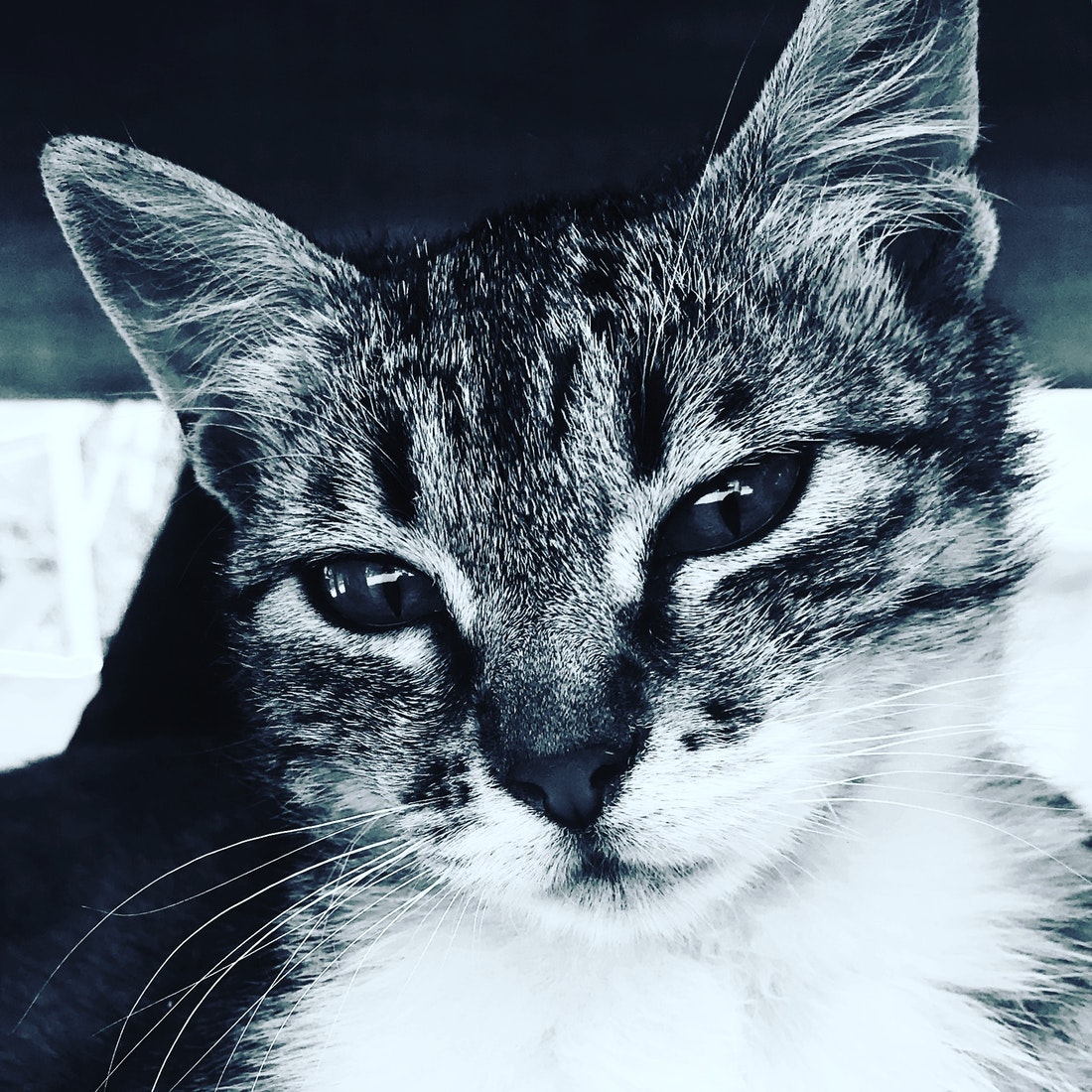
Hetherington [later] wrote that after giving the issue “an evening’s thought,” he decided the paper was so good that it required rapid publishing. Unwilling to go back and replace the plural voice in the document, he did the next best thing and just added a second author: his Siamese cat, Chester. Of course just listing “Chester” as a co-author probably wouldn’t fly, so he invented the name F.D.C. Willard. The “F.D.C.” stood for “Felix Domesticus, Chester.” Willard had been the name of Chester’s father.
Friday in Whitewater will be mostly sunny, with a high of eighty-four. Sunrise is 6:34 AM and sunset 7:05 PM, for 12h 31m 10s of daytime. The moon is a waxing crescent with 27.1% of its visible disk illuminated.
Today is the six hundred seventieth day.Days since Trump’s election, with 11.9.16 as the first day.
On September 14, 1812, Napoleon moved into Moscow. However, he was surprised to have received no delegation from the city. At the approach of a victorious general, the civil authorities customarily presented themselves at the gates of the city with the keys to the city in an attempt to safeguard the population and their property. As nobody received Napoleon he sent his aides into the city, seeking out officials with whom the arrangements for the occupation could be made. When none could be found, it became clear that the Russians had left the city unconditionally.[85] In a normal surrender, the city officials would be forced to find billets and make arrangements for the feeding of the soldiers, but the situation caused a free-for-all in which every man was forced to find lodgings and sustenance for himself. Napoleon was secretly disappointed by the lack of custom as he felt it robbed him of a traditional victory over the Russians, especially in taking such a historically significant city.[85] To make matters worse, Moscow had been stripped of all supplies by its governor, Feodor Rostopchin, who had also ordered the prisons to be opened.
Before the order was received to evacuate Moscow, the city had a population of approximately 270,000 people. As much of the population pulled out, the remainder were burning or robbing the remaining stores of food, depriving the French of their use. As Napoleon entered the Kremlin, there still remained one-third of the original population, mainly consisting of foreign traders, servants and people who were unable or unwilling to flee. These, including the several hundred strong French colony, attempted to avoid the troops.
Lawsuits over the problems at Wisconsin’s juvenile prison complex have cost the state $20.6 million so far and those costs will continue to rise — possibly by large sums if some cases aren’t resolved in the state’s favor.
The facility for more than three years has been under criminal investigation for prisoner abuse and child neglect. If charges are issued, that could open the state to more legal exposure from lawsuits.
“It’s the cost of getting it wrong,” state Rep. Evan Goyke (D-Milwaukee) said of the state’s legal tab.
The legal fees and settlements come on top of an $80 million plan by Gov. Scott Walker and lawmakers to close Lincoln Hills School for Boys and Copper Lake School for Girls by 2021 and replace them with regional facilities for teen inmates.
More than two-thirds of every factual claim made by President Trump at two of his rallies turns out to be false, misleading or unsupported by evidence.
In July, The Fact Checker examined every factual claim made by the president at a rally in Montana. He returned to Montana on Sept. 6, and we decided once again to put every statement of material fact to the truth test to see whether the July rally was an outlier.
In July, 76 percent of his 98 statements were false, misleading or unsupported by the evidence. Last week the tally, out of 88 statements, was 68 percent. The average percentage for the two rallies was 72 percent.
Trump may have done slightly better, fact-wise, at the more recent rally because he spoke more about bills he had signed and actions he had taken. But he veered off course with his tendency to unnecessarily hype good economic data with assertions that it was the best in U.S. history.
Barbara Res, a former vice president in charge of construction, made the allegation in an op-ed published Wednesday by the New York Daily News and in a subsequent interview with The Washington Post, in which she said the incident happened in 1980 or 1981 as Trump Tower was being designed.
According to Res’s account, an architect came to Trump’s office to show him designs for the interiors of residential elevator cabs in Trump Tower, which also hosts businesses. He noticed dots next to the buttons and asked what they were, she said.
“Braille,” the architect replied, according to Res.
Trump then told the architect to “get rid of it,” and the architect resisted, saying doing so would be against the law, she said.
“Get rid of the (expletive) Braille. No blind people are going to live in Trump Tower. Just do it,” Trump told the architect, according to Res’s account.
According to BuzzFeed News, federal law enforcement officials are investigating two waves of curious financial transfers involving Aras and Emin Agalarov that took place at two key points in time that could be relevant to the Russia investigation.
The first set came just 11 days after the June 9 meeting, when an offshore company controlled by [Aras] Agalarov wired more than $19.5 million to his account at a bank in New York.
The second flurry began shortly after Trump was elected. The Agalarov family started sending what would amount to $1.2 million from their bank in Russia to an account in New Jersey controlled by the billionaire’s son, pop singer Emin Agalarov, and two of his friends. The account had been virtually dormant since the summer of 2015, according to records reviewed by BuzzFeed News, and bankers found it strange that activity in Emin Agalarov’s checking account surged after Trump’s victory.
After the election, that New Jersey account sent money to a company controlled by Irakly “Ike” Kaveladze, a longtime business associate of the Agalarovs and their representative at the Trump Tower meeting. Kaveladze’s company, meanwhile, had long funded a music business set up by the person who first proposed the meeting to the Trump camp, Emin Agalarov’s brash British publicist, Rob Goldstone.
(…)
The transactions came to light after law enforcement officials instructed financial institutions in mid-2017 to go back through their records to look for suspicious behavior by people connected to the broader Trump-Russia investigation. The bankers filed “suspicious activity reports” to the Treasury Department’s Financial Crimes Enforcement Network, which in turn shared them with the FBI, the IRS, congressional committees investigating Russian interference, and members of special counsel Robert Mueller’s team.
Suspicious activity reports are not evidence of wrongdoing, but they can provide clues to investigators looking into possible money laundering, tax evasion, or other misconduct. In the case of the Agalarovs and their associates, bankers raised red flags about the transactions but were unable to definitively say how the funds were used.
In the case of the Agalarovs and their associates, the documents show funds moving quickly between accounts across the globe, often, bankers said, with no clear reason and with no clear purpose for how the money was supposed to be used.
BuzzFeed details exactly why the money transfers raised red flags. The timeline starts with the Trump Tower meeting between Donald Trump Jr., Jared Kushner, Paul Manafort, Natalia Veselnitskaya, Kaveladze, and others, set up for the Agalarovs through Goldstone, which took place on June 9, 2016.
Eleven days later — on June 20, the day Trump fired campaign chief Corey Lewandowski and put Manafort in charge — Aras Agalarov used a company called Silver Valley Consulting to move millions that bankers flagged as suspicious.
Silver Valley’s only address is a post office box in the capital of the British Virgin Islands, a country seen as a haven for money laundering and tax evasion. On June 20, Silver Valley sent through its Zurich-based account at Societe Generale Suisse a wire transfer for a little more than $19.5 million to Agalarov’s account at Morgan Stanley in the US.
That same day, another entity controlled by Agalarov — ZAO Crocus International, an arm of his business empire — sent a wire transfer through Societe Generale Suisse for about $43,000 to the same Morgan Stanley account.
(…)
Swiss employees of the bank told their American colleagues that the account was closed in May 2017, but that “due to Swiss confidentiality laws the requested information cannot be provided.”
(…)
Between 2006 and 2016, Silver Valley made nearly 200 transactions for $190 million. Bankers believed that most were legitimate and were part of Agalarov’s global construction business. But some of the transactions raised red flags.
Bank officials said they found high, round-dollar amounts sent to or received from shell companies. Round-dollar wire transfers often trigger alarm bells because most transactions are not that clean. Bankers also noted that some of the transactions passed through multiple companies, a process that can indicate “layering,” a way to hide the original source of funds.
US bank examiners also found that Silver Valley received nearly $900,000 in 2012 from a Russian investigated in the past for tax evasion and embezzlement.
(…)
The following year, Silver Valley received two payments from an aviation firm that were flagged by bankers because they learned that a shareholder was involved with a suspected Russian money laundering scheme.
(I’ve linked here to the Committee to Investigate Russia as a friendly reminder that it’s a good collection – from national and international sources – of information on Russian interference in American democracy.)
On Aug. 10, staffers at his agency were sent an email instructing them to sign a nondisclosure agreement barring them from revealing any confidential information about their work — not just during their time in office but even after they leave the state.
The email then included a spreadsheet with the names of 129 employees who had yet to sign the one-page statement.
“If your name is on the attached list, please print and sign the attached Agreement,” the email says.
According to a copy of the agreement, it applies not just to current full-time employees but also “limited term employees, contractors, interns, externs and law enforcement partners.”
Trump does this on the national level, expecting federal employees who have obligations to the public under the law to remain silent as though they were private employees of the Trump Organization.
(It’s worth noting that Patrick Marley reports that even Scott Walker – none too supportive of open government – was quick to distance himself from Schimel’s approach, thereby giving a good idea of how odd it is even for the WISGOP.)
Schimel must imagine himself a tiny Trump, another man who thinks centuries of evolving public law and open government standards should yield to his private needs.
If Schimel wants private standards, then he needs to seek a private practice.
What a contagion this is, of scheming men who want private standards and private obligations while holding public office.
Here one finds another good reason – there are many – to support Josh Kaul for Wisconsin Attorney General.
Thursday in Whitewater will be mostly sunny, with a high of seventy-eight. Sunrise is 6:33 AM and sunset 7:07 PM, for 12h 34m 02s of daytime. The moon is a waxing crescent with 18.2% of its visible disk illuminated.
Today is the six hundred sixty-ninth day.Days since Trump’s election, with 11.9.16 as the first day.
The Battle of the Plains of Abraham, also known as the Battle of Quebec (Bataille des Plaines d’Abraham, or Première bataille de Québec in French), was a pivotal battle in the Seven Years’ War (referred to as the French and Indian War to describe the North American theatre). The battle, which began on 13 September 1759, was fought by the British Army and Navy against the French Army on a plateau just outside the walls of Quebec City, on land that was originally owned by a farmer named Abraham Martin, hence the name of the battle. The battle involved fewer than 10,000 troops between both sides, but proved to be a deciding moment in the conflict between France and Britain over the fate of New France, influencing the later creation of Canada.[4]
The culmination of a three-month siege by the British, the battle lasted about an hour. British troops commanded by General James Wolfe successfully resisted the column advance of French troops and Canadien militia under General Louis-Joseph, Marquis de Montcalm, employing new tactics that proved extremely effective against standard military formations used in most large European conflicts. Both generals were mortally wounded during the battle; Wolfe received three gunshot wounds that ended his life within minutes of the beginning of the engagement and Montcalm died the next morning after receiving a musket ball wound just below his ribs. In the wake of the battle, the French evacuated the city; their remaining military force in Canada and the rest of North America came under increasing pressure from British forces.
France ceded most of its possessions in eastern North America to Great Britain in the Treaty of Paris.
President Trump took issue Thursday with the number of deaths attributable to Hurricane Maria, falsely saying a much higher count had been generated by Democrats to “make me look as bad as possible.”
A sweeping report from George Washington University released last month estimated there were 2,975 “excess deaths” in the six months after the storm made landfall in Puerto Rico in September 2017.
Trump said on Twitter that “they had anywhere from 6 to 18 deaths” when he visited the island about two weeks after the storm.
….
Trump’s tweets — which came as a highly dangerous Hurricane Florence churned toward the Carolinas — brought an immediate rebuke from Democrats in Congress, as well as some Republicans.
Rep. Ileana Ros Lehtinen (R-Fla.) said she believes the figure of nearly 3,000 is sound.
“What kind of mind twists that statistic into ‘Oh, fake news is trying to hurt my image,’” she said. “How can you be so self-centered and try to distort the truth so much? It’s mind boggling.”
In a tweet, Sen. Edward J. Markey (D-Mass.) said only Trump “could see the tragedy in Puerto Rico and conclude that he is the victim. May God bless the souls of the nearly 3,000 Americans that died in Puerto Rico and may he take pity on your soul, Mr. President.”
(There may never have been a more excuse-making, irresponsible chief executive than Donald J. Trump.)
A lightly edited transcript of our conversation follows.
Sean Illing
I’ll ask you straightforwardly: Do you believe the Russian government successfully targeted and compromised Trump?
Craig Unger
Yes, absolutely. But let’s go back in time, because I think all of this began as a money-laundering operation with the Russian mafia. It’s well known that Trump likes doing business with gangsters, in part because they pay top dollar and loan money when traditional banks won’t, so it was a win-win for both sides.
The key point I want to get across in the book is that the Russian mafia is different than the American mafia, and I think a lot of Americans don’t understand this. In Russia, the mafia is essentially a state actor. When I interviewed Gen. Oleg Kalugin, who is a former head of counterintelligence in the KGB and had been Vladimir Putin’s boss at one point, I asked him about the mafia. He said, “Oh, it’s part of the KGB. It’s part of the Russian government.”
And that’s essential to the whole premise of the book. Trump was working with the Russian mafia for more than 30 years. He was profiting from them. They rescued him. They bailed him out. They took him from being $4 billion in debt to becoming a multibillionaire again, and they fueled his political ambitions, starting more than 30 years ago. This means Trump was in bed with the Kremlin as well, whether he knew it or not.
Sean Illing
Let’s dig into this a bit. You claimed just now, as you do in the book, that the Russian mafia has been using Trump-branded real estate to launder money for over three decades. What evidence do you have to back this up?
Craig Unger
You really have to go back 20 or 30 years to understand who the key Russians were, what role they played in the Russian mafia, and how they related to Trump.
The very first episode that’s been documented, to my knowledge, was in 1984 when David Bogatin — who is a Russian mobster, convicted gasoline bootlegger, and close ally of Semion Mogilevich, a major Russian mob boss — met with Trump in Trump Tower right after it opened. Bogatin came to that meeting prepared to spend $6 million, which is equivalent to about $15 million today.
Bogatin bought five condos from Trump at that meeting. Those condos were later seized by the government, which claimed they were used to launder money for the Russian mob. [Full interview continues @ Vox.com.]
The Intellectualist, a left-leaning news aggregator, points out that Senator Lindsey Graham (R-SC) has received at least $800,000 in campaign donations from a man with ties to Putin-allied oligarchs, which could explain why the Senator has been increasingly supportive of President Trump lately.
Ruth May, in a piece for the Dallas Morning News, details the donations from Len Blavatnik, “one of the largest donors to GOP political action committees in the 2015-16 election cycle.”
Data from the Federal Election Commission show that Blavatnik’s campaign contributions dating back to 2009-10 were fairly balanced across party lines and relatively modest for a billionaire. During that season he contributed $53,400. His contributions increased to $135,552 in 2011-12 and to $273,600 in 2013-14, still bipartisan.
In 2015-16, everything changed. Blavatnik’s political contributions soared and made a hard right turn as he pumped $6.35 million into GOP political action committees, with millions of dollars going to top Republican leaders including Sens. Mitch McConnell, Marco Rubio and Lindsey Graham.
In 2017, donations continued, with $41,000 going to both Republican and Democrat candidates, along with $1 million to McConnell’s Senate Leadership Fund.
An infographic accompanying May’s article notes the following:
Blavatnik contributed $800,000 to the Security is Strength PAC, associated with Sen. Lindsey Graham, R-S.C., via Access Industries.
Blavatnik and oligarch Viktor Vekselberg met attending university in Russia years ago, and together they now own a 20.5% stake in Rusal, oligarch Oleg Deripaska‘s aluminum company.
Further, nearly 4 percent of Deripaska’s stake in Rusal is owned by Putin’s state-controlled bank, VTB, which is currently under U.S. sanctions. VTB was exposed in the Panama Papers in 2016 for facilitating the flow of billions of dollars to offshore companies linked to Putin.
Earlier this year, The Associated Press reported that Paul Manafort, Trump’s former campaign manager, began collecting $10 million a year in 2006 from Deripaska to advance Putin’s interests with Western governments. Deripaska’s name turned up again in an email handed over to Mueller’s team by Manafort’s attorneys …
(…)
Vekselberg has connections to at least two Americans who made significant GOP campaign contributions during the last cycle. They are among several Americans who also merit Mueller’s scrutiny.
Anne Applebaum writes A Warning From Europe: The Worst Is Yet to Come (“Polarization. Conspiracy theories. Attacks on the free press. An obsession with loyalty. Recent events in the United States follow a pattern Europeans know all too well”):
onarchy,tyranny, oligarchy, democracy—thesewere all familiar to Aristotle more than 2,000 years ago. But the illiberal one-party state, now found all over the world—think of China, Venezuela, Zimbabwe—was first developed by Lenin, in Russia, starting in 1917. In the political-science textbooks of the future, the Soviet Union’s founder will surely be remembered not for his Marxist beliefs, but as the inventor of this enduring form of political organization. It is the model that many of the world’s budding autocrats use today.
Unlike Marxism, the Leninist one-party state is not a philosophy. It is a mechanism for holding power. It works because it clearly defines who gets to be the elite—the political elite, the cultural elite, the financial elite. In monarchies such as prerevolutionary France and Russia, the right to rule was granted to the aristocracy, which defined itself by rigid codes of breeding and etiquette. In modern Western democracies, the right to rule is granted, at least in theory, by different forms of competition: campaigning and voting, meritocratic tests that determine access to higher education and the civil service, free markets. Old-fashioned social hierarchies are usually part of the mix, but in modern Britain, America, Germany, France, and until recently Poland, we have assumed that competition is the most just and efficient way to distribute power. The best-run businesses should make the most money. The most appealing and competent politicians should rule. The contests between them should take place on an even playing field, to ensure a fair outcome.
Lenin’s one-party state was based on different values. It overthrew the aristocratic order. But it did not put a competitive model in place. The Bolshevik one-party state was not merely undemocratic; it was also anticompetitive and antimeritocratic. Places in universities, civil-service jobs, and roles in government and industry did not go to the most industrious or the most capable. Instead, they went to the most loyal. People advanced because they were willing to conform to the rules of party membership. Though those rules were different at different times, they were consistent in certain ways. They usually excluded the former ruling elite and their children, as well as suspicious ethnic groups. They favored the children of the working class. Above all, they favored people who loudly professed belief in the creed, who attended party meetings, who participated in public displays of enthusiasm. Unlike an ordinary oligarchy, the one-party state allows for upward mobility: True believers can advance. As Hannah Arendt wrote back in the 1940s, the worst kind of one-party state “invariably replaces all first-rate talents, regardless of their sympathies, with those crackpots and fools whose lack of intelligence and creativity is still the best guarantee of their loyalty.”
Lenin’s one-party system also reflected his disdain for the idea of a neutral state, of apolitical civil servants and an objective media. He wrote that freedom of the press “is a deception.”
The use of government-issued New Market Tax Credits will bring Whitewater a Fairfield Inn and a building for the existing local campus to lease. Proponents of an ordinary hotel and a lease agreement for the university cannot offer any evidence that these projects will boost local individual or household incomes.
What one can show – now – is that the New Market Tax Credit program has been a federal failure. Nicole Kaeding explains New Market Tax Credits Fail to Deliver:
Created in 2000 as part of the Community Renewal Tax Relief Act, the federal New Markets Tax Credit (NMTC) program provides tax credits to “spur new or increased investments into operating businesses and real estate projects in low-income areas.” Two new reports [in 2014], one from the Government Accountability Office (GAO) and the second from [then] Senator Tom Coburn’s office, question the effectiveness of NMTC in accomplishing that goal.
The program provides tax credits to investors in low-income neighborhood development projects equaling 39 percent of the investment value over seven years. For example, a $1 million investment provides a $390,000 tax credit to the investor—a healthy sum. Congress has provided $40 billion in tax credits since 2003 with banks and other financial institutions receiving “nearly 40 percent of all NMTC[s]” since 2007.
But the program’s structure is flawed. According to GAO, the Treasury Department—which oversees the program—does not have adequate oversight of the program. For instance, the Treasury is unable to determine if a project has failed even after receiving seven years of tax credits. Treasury’s reporting on numerous aspects of the program is incomplete and missing.
….
Unfortunately, these reports are not the first to document the NMTC program’s failings. GAO has issuance reports in 2004, 2007, and 2010 highlighting the program’s numerous flaws. Yet, Congress continues to reauthorize the program wasting billions of dollars.
A local story about the hotel and ‘community engagement’ center’s groundbreaking is unintentionally embarrassing —
PaltryAttendance. The Daily Union‘s stringer – because the publisher doesn’t seem to think Whitewater’s worth a dedicated reporter – writes that
“The ceremony, which drew about 75 people, was held under a tent set up on the future hotel site. Attending were UW-Whitewater officials, city and regional governmental representatives, members of the construction and contracting firms involved with the project and four elected officials from the county and state levels.”
Whitewater has 14,622 residents, but only 75 were at the groundbreaking for a community engagement center. With only one-half-of-one-percent of the local population in attendance, one can guess that Whitewater’s not that engaged at this time. Chancellor Kopper and university public relations flack Sara Kuhl have their work cut out for them.
(Kuhl will have to do better than the typical no comment/still reviewing via email she’s used in a recent campus assault case if she wants to turn around the lack of enthusiasm for community engagement. Kopper has no one in media relations who’s useful for more than tired boilerplate.)
Ray Cross, Man of Platitudes. Ray Cross, president of the UW System, had this to say:
Beginning his remarks, UW System President Cross pointed to the ceremonial hardhats and shovels near the tent for the groundbreaking.
“Those are symbolic of what we are doing — we are breaking ground on building a new partnership,” he said. “It is a mutually-beneficial partnership, and we all win from that. We appreciate the leadership and the campus for making this happen. On behalf of the Board of Regents, it is my pleasure to congratulate you.”
Cross said that Fairfield Inn & Suites was “making a bold move, but a good move,” jesting that “I hope you make a lot of money.”
Ceremonial hardhats and shovels as symbolic of construction – honest to goodness, does Cross think his audience needed a reminder of the symbolism? (Next up: Cross explains to Whitewater’s officials that a red octagon symbolizes a need to stop moving forward.)
“New partnership….mutually-beneficial partnership….we all win from that” – it’s the jargon of a statist official traveling about likely saying the same words for any occasion. Small wonder he’s lasted so well under this state administration.
By the way, it’s too funny that Cross thinks an average hotel in Whitewater is a “bold move” – it’s more subtle than saying ‘I’m surprised you yokels are getting even an ordinary hotel,’ but it amounts to the same thing.
Cross isn’t clever enough (or disciplined enough) to check his condescension in front of his own audience.
The Key Question. How will these millions in tax credits for a hotel and leased university space improve the individual and household incomes of Whitewater’s residents?
Wednesday in Whitewater will be mostly sunny, with a high of eighty-one. Sunrise is 6:32 AM and sunset 7:09 PM, for 12h 36m 54s of daytime. The moon is a waxing crescent with 10.6% of its visible disk illuminated.
Today is the six hundred sixty-eighth day.Days since Trump’s election, with 11.9.16 as the first day.
Whitewater’s Community Involvement Commission meets at 5 PM.
Lascaux….is the setting of a complex of caves near the village of Montignac, in the department of Dordogne in southwestern France. Over 600 parietal wall paintings cover the interior walls and ceilings of the cave. The paintings represent primarily large animals, typical local and contemporary fauna that correspond with the fossil record of the Upper Paleolithic time. The drawings are the combined effort of many generations, and with continued debate, the age of the paintings is estimated at around 17,000 years (early Magdalenian).[3][4][5] Lascaux was inducted into the UNESCO World Heritage Sites list in 1979, as element of the Prehistoric Sites and Decorated Caves of the Vézère Valley.[6]
On September 12, 1940, the entrance to the Lascaux Cave was discovered by 18-year-old Marcel Ravidat. Ravidat (died in 1995) returned to the scene with three friends, Jacques Marsal, Georges Agnel, and Simon Coencas, and entered the cave via a long shaft. The teenagers discovered that the cave walls were covered with depictions of animals.[7][8] Galleries that suggest continuity, context or simply represent a cavern were given names. Those include the Hall of the Bulls, the Passageway, the Shaft, the Nave, the Apse, and the Chamber of Felines. The cave complex was opened to the public on July 14, 1948.[9] By 1955, carbon dioxide, heat, humidity, and other contaminants produced by 1,200 visitors per day had visibly damaged the paintings. As air condition deteriorated fungi and lichen increasingly infested the walls. Consequently, the cave was closed to the public in 1963, the paintings were restored to their original state and a monitoring system on a daily basis was introduced.
Lascaux II, an exact copy of the Great Hall of the Bulls and the Painted Gallery opened in 1983 in the cave’s vicinity, a compromise and attempt to present an impression of the paintings’ scale and composition for the public without harming the originals.[8] A full range of Lascaux’s parietal art is presented a few kilometres from the site at the Centre of Prehistoric Art, Le Parc du Thot, where there are also live animals representing ice-age fauna.[10]
The owner of Qual Line Fence in Waunakee, a company [Ray] Statz founded in 1956, said he and about 16 employees put in about 500 fences a year made with steel, aluminum and cedar, all products that have seen steep cost increases stemming from U.S. tariffs.
“Wood, steel and aluminum,” he said. “They’re all hit.”
He estimates that since the beginning of the year, he has seen the cost of the materials he uses climb between 25 and 30 percent. That’s not enough to cause any layoffs, he said, but the trade dispute adds uncertainty to the market.
“It makes me lose some sleep at night,” Statz said. “It makes it difficult. We’re supposed to take a gamble and wonder what the future’s going to be by next spring. It’s not the good old days.”
President Donald Trump announced the tariffs in March — 25 percent on foreign steel and 10 percent on aluminum — and by the time they took effect on June 1, prices were already spiking. A year earlier the administration slapped tariffs on Canadian lumber, which combined with other factors pushed the price to record highs.
Three-hundred-thousand gallons of manure-contaminated water spilled into a creek in northeastern Wisconsin.
The spill is believed to have happened late Sunday after a week of heavy rains, combined with a faulty valve at the Phil Roberts farm, which is home to 220 head of cattle. According to the state Department of Natural Resources, a containment pit overflowed into Silver Creek — a tributary of the larger Duck Creek.
The manure went down a grassy slope into Silver Creek near the Outagamie and Brown county line, within the Oneida Nation of Wisconsin’s boundaries.
James Snitgen, water resources supervisor for the tribe, said, “because of the recent heavy rains there was way more water makeup in that, so I wouldn’t necessarily call it ‘manure,’ I’d call it a manure-water mixture going down.”
This matters
This should matter
This definitely used to matter to Republicans
Except the party is now being led by the self-proclaimed KING OF DEBT
Therefore
It is to be expected
This no longer matters https://t.co/2Rb1PA0g9G
Since the Council of Nicaea, Christians have been prone to issue joint statements designed to draw the boundaries of orthodoxy — and cast their rivals beyond them. Another one, not quite in the same league, was recently issued by a group including John MacArthur, a prominent (and very conservative) evangelical pastor and Bible teacher.
“The Statement on Social Justice and the Gospel” claims that social justice is not, in fact, a definitional component of the gospel, and that it is heresy to elevate “non-essentials to the status of essentials.” As you might expect, the document affirms traditional beliefs on same-sex relationships and “God-ordained” gender roles. But it seems particularly focused on rejecting collective blame in racial matters. “We deny that .?.?. any person is morally culpable for another person’s sin,” the statement argues. “We further deny that one’s ethnicity establishes any necessary connection to any particular sin.”
….
The purpose of “The Statement on Social Justice and the Gospel” is clear enough. It is, as one prominent evangelical leader put it to me, “to stop any kind of real repentance for past social injustice, to make space for those who are indeed ethnonationalists, and to give excuse for those who feel Christians need only ‘preach the gospel’ to save souls and not love their neighbors sacrificially whether they believe as we do or not.”
The MacArthur statement is designed to support not a gospel truth but a social myth. The United States, the myth goes, used to have systematic discrimination, but that ended with the Civil Rights Act of 1964. Racism is now purely an individual issue, for which the good people should not be blamed. This narrative has nothing to do with true religion. It has everything to do with ignorant self-satisfaction.
It is neither realistic nor fair to ignore the continuing social effects of hundreds of years of state-sponsored oppression, cruelty and stolen wages. It is neither realistic nor fair to ignore the current damage of mass incarceration and failed educational institutions on minority groups. Prejudice and institutional evil are ongoing — deeply ingrained in social practice and ratified by indifference. Repentance is in order — along with a passion for social justice that is inseparable from the Christian gospel.
(Trumpism threatens more even than the political order; it perverts Christian theology to a political end that is both dangerous and, fundamentally, heretical.)
Scientists are uncovering new clues to the origins of domestication in an unlikely creature: foxes. After nearly 60 years of selective breeding in Siberia, there are a few rare foxes that are pretty unafraid of people. So, of course, we wanted to meet them.
The story goes back to 1959, when geneticist Dmitri Belyaev set out to try domestication from the very beginning. He had this idea that was radical for its time: domesticated animals like dogs are friendly because of genes that govern their behavior. Meaning, the process that turned wolves into dogs thousands and thousands of years ago was essentially evolution.
So Belyaev began selectively breeding foxes: the ones that weren’t as aggressive or afraid of people were allowed to have offspring. After Belyaev’s death in 1985, geneticist Lyudmila Trut — co-author of How to tame a fox (and build a dog) — took over. Over time, the foxes became more dog-like: they’re not skittish around people, though they might not climb into your lap for a cuddle, either.
(Domesticated is a flexible description: it seems unlikely that these foxes are domesticated sufficiently to make safe, reliable pets. Beautiful, of course, but beauty is not gentleness. In any event, cats make great pets…)
Two questions haunt Old Whitewater (where Old Whitewater is a state of mind rather than an age or a particular person):
What does it mean to be a college town? and What is meaningful community development?
(There are other serious questions, but one can be sure – at the least – that these two have Whitewater in their gaze.)
The community has grappled openly with the first question – without resolution – long before I began writing in ’07. The second question, made more germane with each passing year, is likely to surpass even the first in local importance.
Neither question will when finally resolved – and both will be resolved – yield happy answers for the last thirty years of policymaking.
Indeed, between now and then, policymaking will look much as much like whistling past the graveyard as anything else.
Tuesday in Whitewater will be sunny, with a high of seventy-seven. Sunrise is 6:31 AM and sunset 7:11 PM, for 12h 39m 45s of daytime. The moon is a waxing crescent with 4.7% of its visible disk illuminated.
Today is the six hundred sixty-seventh day.Days since Trump’s election, with 11.9.16 as the first day.
Whitewater’s Public Works Committee meets at 6:00 PM.
Millions of dollars in federal funds are being withheld from local municipalities by the Wisconsin Department of Transportation, Target 2 Investigates has learned.
Both Appleton and Green Bay are losing out on more than $3 million in funds. These municipalities don’t know where that money has been diverted.
“Where is the money going? We have no idea,” says Steve Grenier,
Green Bay Public Works Director.
Local officials were recently informed about a change in federal funding when it comes to Surface Transportation Block Grants. That’s money that Metropolitan Planning Organizations (MPOs) request to complete transportation projects.
Steve Grenier serves as the Vice President of Brown County’s MPO Policy Board.
“That’s federal money that comes down from Federal Highway Administration, filters through the Wisconsin Department of Transportation and then comes to local programs,” Grenier says.
A five-year funding program has been reduced to a four-year program.
MPOs across the state are missing one year of federal funding. It was money they were depending on for upcoming projects.
Many goods produced by Wisconsin farmers, from milk to livestock, are sold to local buyers. But farmers, like Bob Pronschinske from North Creek, know the prices they receive are directly related to the world market.
“We have to have foreign trade, anybody can figure that out,” said Pronschinske, who owns a dairy farm with his son.
Pronschinske said he’s worried about the future of exports.
Since President Donald Trump placed new tariffs on steel and aluminum imports in March, trading partners like China and Mexico have placed their own taxes on United States agricultural products. Despite the retaliation, Trump has said the tariff strategy will make trade more fair for United States producers.
Pronschinske said Wisconsin farmers who voted for the president are watching the situation closely.
“If this tariff works, yes, he’s going to be a great, great president. If this foreign trade all works out for us, yeah, we’ll have prices where they need to be. But the big question is if it’s going to work,” Pronschinske said.
Intelligence agencies investigating mysterious “attacks” that led to brain injuries in U.S. personnel in Cuba and China consider Russia to be the main suspect, three U.S. officials and two others briefed on the investigation tell NBC News.
The suspicion that Russia is likely behind the alleged attacks is backed up by evidence from communications intercepts, known in the spy world as signals intelligence, amassed during a lengthy and ongoing investigation involving the FBI, the CIA and other U.S. agencies. The officials declined to elaborate on the nature of the intelligence.
The evidence is not yet conclusive enough, however, for the U.S. to formally assign blame to Moscow for incidents that started in late 2016 and have continued in 2018, causing a major rupture in U.S.-Cuba relations.
Since last year, the U.S. military has been working to reverse-engineer the weapon or weapons used to harm the diplomats, according to Trump administration officials, congressional aides and others briefed on the investigation, including by testing various devices on animals. As part of that effort, the U.S. has turned to the Air Force and its directed energy research program at Kirtland Air Force Base in New Mexico, where the military has giant lasers and advanced laboratories to test high-power electromagnetic weapons, including microwaves.
The Trump administration, taking its third major step this year to roll back federal efforts to fight climate change, is preparing to make it significantly easier for energy companies to release methane into the atmosphere.
Methane, which is among the most powerful greenhouse gases, routinely leaks from oil and gas wells, and energy companies have long said that the rules requiring them to test for emissions were costly and burdensome.
The Environmental Protection Agency, perhaps as soon as this week, plans to make public a proposal to weaken an Obama-era requirement that companies monitor and repair methane leaks, according to documents reviewed by The New York Times. In a related move, the Interior Department is also expected in coming days to release its final version of a draft rule, proposed in February, that essentially repeals a restriction on the intentional venting and “flaring,” or burning, of methane from drilling operations.
The new rules follow two regulatory rollbacks this year that, taken together, represent the foundation of the United States’ effort to rein in global warming. In July, the E.P.A. proposed weakening a rule on carbon dioxide pollution from vehicle tailpipes. And in August, the agency proposed replacing the rule on carbon dioxide pollution from coal-fired power plants with a weaker one that would allow far more global-warming emissions to flow unchecked from the nation’s smokestacks.
Hardly new. It was developed to combat the truth being available on the internet in Russia, instead of China-style censorship. Then it was exported against Russian-speaking neighbors and then used globally by 2015. https://t.co/qEohvkRDIy
This Tuesday, September 11th at 12:30 PM, there will be a showing of The 60 Yard Line @ Seniors in the Park, in the Starin community building:
The 60 Yard Line (Comedy)
Tuesday, September 11, 12:30 pm
Rated R (language/adult themes); 1 hour, 30 min. (2017)
Filmed in Green Bay! Based on a true story: during the 2009 Packers football season, Ben “Zagger” Zagowski and Nick “Polano” Polano, best buds and co-workers, buy a house in the parking lot of Lambeau Field. They are forced to pick between a football lifestyle…and a girl. Lives change. She wants a wedding…he calls an audible. Oh, and there’s a cow. Guest appearances by Chuck Liddell, Ahman Green, John Kuhn, and Mark Tauscher.
Monday in Whitewater will be sunny, with a high of seventy-two. Sunrise is 6:30 AM and sunset 7:12 PM, for 12h 42m 37s of daytime. The moon is new with 0.9% of its visible disk illuminated.
Today is the six hundred sixty-sixth day.Days since Trump’s election, with 11.9.16 as the first day.
Whitewater’s Planning Commission meets at 6:30 PM.
Gov. Scott Walker’s former transportation secretary says the GOP governor isn’t telling the truth about road projects and is taking a high-risk gamble that could see the state invest billions of dollars in obsolete highways.
Walker has been “increasingly inaccurate” when describing the state’s highway system, said Mark Gottlieb, a Republican who was in the Assembly for eight years and served as Walker’s transportation secretary from 2011 to 2017.
Gottlieb is the third former top aide to Walker to speak out against the governor in recent months as he faces a re-election challenge from Democrat Tony Evers, the state schools superintendent.
….
Gottlieb said state and federal officials go through a lengthy process to determine when to add lanes to roads to reduce traffic congestion and accidents. The governor contended people may drive less in the future, but Gottlieb noted traffic has been increasing since the country climbed out of the 2008 recession.
Republican Gov. Scott Walker took 65 percent more taxpayer-funded flights last year than the Democratic governor of New York, whose flying was noted in a recent news report for being more frequent than any governor among the 10 most populous states.
….
New York Gov. Andrew Cuomo took 195 trips in taxpayer-funded planes and helicopters in 2017, the New York Times reported Friday. The article noted that while he is entitled by law to fly the fleet, the Democrat’s frequent trips this election year have raised questions of whether state aircraft gives him an unfair advantage over his primary opponent, Cynthia Nixon.
Walker, now running for a third term in a tough match-up with Democratic State Superintendent Tony Evers, took 322 flights last year. That was down from the 351 he took in 2016. Only about a dozen over both years were reimbursed by the campaign.
The latest reason to be suspicious is Trump’s attacks on a formerly obscure Justice Department official named Bruce Ohr. Trump has repeatedly criticized Ohr and called for him to be fired. Ohr’s sin is that he appears to have been marginally involved in inquiries into Trump’s Russian links. But Ohr fits a larger pattern. In his highly respected three-decade career in law enforcement, he has specialized in going after Russian organized crime.
It just so happens that most of the once-obscure bureaucrats whom Trump has tried to discredit also are experts in some combination of Russia, organized crime and money laundering.
It’s true of Andrew McCabe (the former deputy F.B.I. director whose firing Trump successfully lobbied for), Andrew Weissmann (the only official working for Robert Mueller whom Trump singles out publicly) and others. They are all Trump bogeymen — and all among “the Kremlin’s biggest adversaries in the U.S. government,” as Natasha Bertrand wrote in The Atlantic. Trump, she explained, seems to be trying to rid the government of experts in Russian organized crime.
I realize that this evidence is only circumstantial and well short of proof. But it’s one of many suspicious patterns about Trump and Russia. When you look at them together, it’s hard to come away thinking that the most likely explanation is coincidence.
Mount Pleasant’s millions in borrowing to support the construction of Foxconn Technology Group’s $10 billion factory there have led to a one-notch downgrade in the village’s credit rating over fears that the massive factory may not produce the economic benefits officials had promised.
Sunday in Whitewater will be sunny, with a high of seventy. Sunrise is 6:29 AM and sunset 7:14 PM, for 12h 45m 27s of daytime. The moon is new with 0.1% of its visible disk illuminated.
Today is the six hundred sixty-fifth day.Days since Trump’s election, with 11.9.16 as the first day.
On this day in 1776, the Second Continental Congress official declares the United States the name for the new country:
The Second Continental Congress, meeting in Philadelphia on this day in 1776, declared that the name of the newly formed nation fighting for its independence from Great Britain would be “The United States.” This designation replaced the term “United Colonies,” then in general use.
….
The National Archives cites the first known use of the formal term “United States of America” as being found in the Declaration of Independence, recognizing Jefferson, its chief author and subsequently the nation’s third president, as its originator.
When it was written in June 1776, Jefferson’s “rough draught” employed a headline in capital letters that read: “A Declaration by the Representatives of the UNITED STATES OF AMERICA in General Congress assembled.” In the final edit, however, that language was changed to read: “The unanimous Declaration of the thirteen united States of America.” To archivists, the fact that the phrase “United States of America” appears in both versions of the Declaration offers sufficient evidence to credit Jefferson with having coined the phrase.
Historians have also noted the existence of a resolution prepared by Lee, another Virginian, which was presented to the delegates in Philadelphia on June 7, 1776, and approved on July 2, resolved: “That these United Colonies are, and of right ought to be, free and independent States.”
To understand what has happened to the Republican Party under Donald Trump, consider the case of Wisconsin Gov. Scott Walker.
There was a time, not too many years ago, when Walker looked like a plausible, even likely, candidate for the Republican presidential nomination.
Walker, who spent nearly all of his adult life running for and holding office, rose to national prominence after a highly visible showdown with his state’s public sector unions. He wrote a book about the experience and toured the country touting his policy record and his state’s strong economy in the years after the recession. In many ways, he looked like—or at least played the role of—a serious, governance-focused conservative politician.
….
Among those who have fallen in line is Scott Walker, who spent part of yesterday—the first day of the NFL’s regular season—tweeting inane pablum about the kneeling players and asking whether Tony Evers, his Democratic opponent in Wisconsin’s gubernatorial race, supports the player protests. (Walker and Evers are currently tied in the polls.) Among those tweets was this heart-on-flannel Bitmoji, which resembles a goofy parody of flag-waving GOP patriotism.
….
Walker’s policy record since exiting the presidential race (like his record prior to entering it) is rife with shady local deal making in the name of job creation, including a county-led plan to locate a FoxConn facility in the state using state subsidies and the threat of eminent domain. That effort was backed by none other than President Trump.
Walker is no longer a figure of national significance, nor is his political trajectory all that unusual. His tweets are embarrassing, but not in a way that stands out, particularly when compared to Trump himself.
But Walker’s evolution from policy-focused governor to figure of pure political pandering illustrates the overall trajectory of the GOP, which has surrendered itself almost entirely to Trump’s hostile takeover. Donald Trump’s victory over Scott Walker, and the Republican Party, is all but complete.
A review of coverage produced by regional media outlets over recent years found that many of the sheriffs who cheered the president have come under sharp scrutiny from the press for their own actions – or for those of the officers in their departments.
They have been held accountable by local journalists for incidents including the leaving of a service pistol in a casino bathroom, alleged mistreatment in jails, the wearing of blackface by an officer, and various other actions.
Here, the Guardian has compiled some of the notable reporting on the sheriffs who appeared with Trump:
1. Sheriff Ana Franklin, Morgan county, Alabama
Franklin is under investigation by the FBI and state authorities after a local news blogger, Glenda Lockhart, disclosed last year that the sheriff used $150,000 in public money to invest in a now-bankrupt used car dealership that was part-owned by a convicted fraudster. The money was taken from a fund meant for feeding inmates in the county jail.The sheriff’s office recruited Lockhart’s grandson as an informant as they attempted to find a source leaking information to the blogger. The grandson said he was paid to install spyware on Lockhart’s computer. Franklin’s deputies raided Lockhart’s home and seized her computer. Franklin was found by a judge to have broken the law.
Lockhart’s findings have been built upon by several local reporters, including WAAY-31 television’s investigations team and the Decatur Daily. In a statement posted to Facebook in April, Franklin incorrectly described the stories about her as “misinformation, false reports and slander”.
(The Guardian lists nine more sheriffs, all in the photo with Trump, who have had clashes with a free press.)
In occupied countries, large public events can spontaneously take on political overtones, too. When the Czech hockey team beat the Soviet Union at the world championships in 1969, one year after the Soviet invasion of the country, half a million people flooded the streets in a celebration that became a show of political defiance. In 1956, 100,000 people came to the reburial of a Hungarian politician who had been murdered following a show trial. The funeral oratory kicked off an anti-communist revolution a few days later.
I am listing all these distant foreign events because at the moment they have strange echoes in Washington. Sen. John McCain’s funeral felt like one of those spontaneous political events. As in a dictatorship, people spoke in code: President Trump’s name was not mentioned, yet everybody understood that praise for McCain, a symbol of the dying values of the old Republican Party, was also criticism of the authoritarian populist in the White House. As in an occupied country, people spoke of resistance and renewal in the funeral’s wake. Since then, public officials have also described, anonymously, new forms of “patriotic treason” within the White House and in comments to Bob Woodward and the New York Times. As in an unlawful state, these American officials say they are quietly working “within the system,” in defiance of Trump, for the greater good of the nation.
There can be only one explanation for this kind of behavior: White House officials, and many others in Washington, really do not feel they are living in a fully legal state. True, there is no communist terror; the president’s goons will not arrest public officials who testify to Congress; no one will be murdered if they walk out of the White House and start campaigning for impeachment or, more importantly, for the invocation of the 25th Amendment, the procedure to transfer power if a president is mentally or physically unfit to remain in office. Nevertheless, dozens of people clearly don’t believe in the legal mechanisms designed to remove a president who is incompetent or corrupt. As the anonymous op-ed writer put it in the New York Times, despite “early whispers within the cabinet of invoking the 25th Amendment,” none of the secret patriots “wanted to precipitate a constitutional crisis” and backed off.
Former Treasury Secretary Lawrence Summers called the results of the most recent Federal Reserve stress test of the largest banks “comically absurd,” and called on regulators to boost capital at financial institutions.
Summers made the comments after a presentation at the Federal Reserve Bank of Boston on the persistence of low interest rates in global economies, a phenomenon which he explained as excess savings pursuing a shortage of investments. That trend has been partially mitigated by fiscal programs, he said, such as Social Security and Medicare in the U.S., which reduce to some extent the propensity to save.
“If we are likely to live in a world of systematically lower interest rates, systematically more higher asset price multiples than we have in the past,” then the case “for prudential regulation and for high levels of capital requirements in banks and more financial institutions is greatly increased,” Summers said.
Continually low interest rates, a feature of the nine-year-old U.S. expansion where the policy rate is only 1.75 percent to 2 percent currently, can produce asset bubbles.
There are few things more magical in this world than hundreds of dolphins racing through the wild Monterey Bay on a foggy fall morning. For the last week, a superpod of common dolphins hundreds strong has been racing the Monterey Bay, hot on the tails of billions of baitfish. This video was filmed on Labor Day just off of Point Pinos in Pacific Grove, and is being played back at half speed.